
Field Trip to 龙庆峡 Longqingxia
Sunday, July 18th, 2010 in: News, Travel
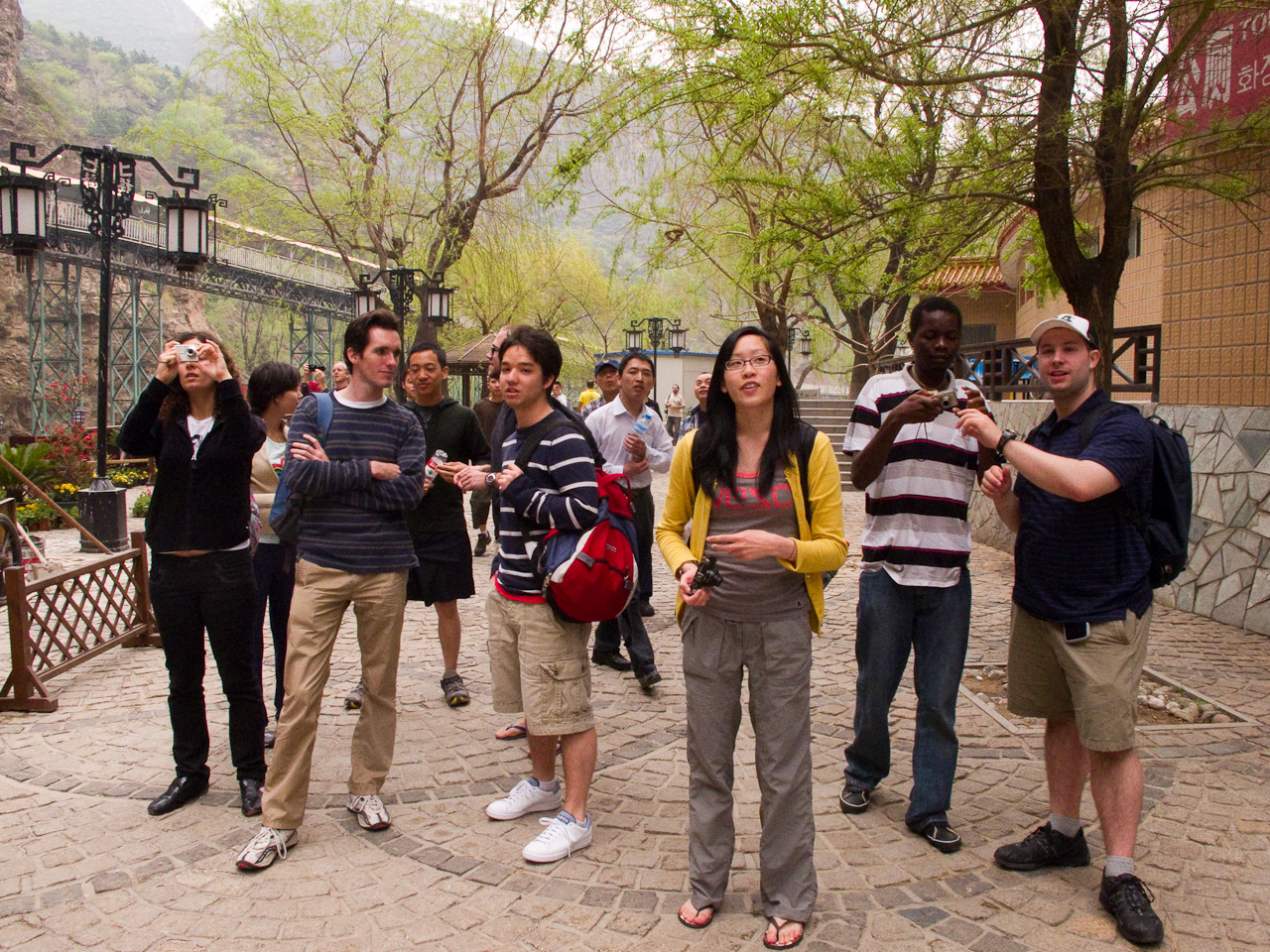
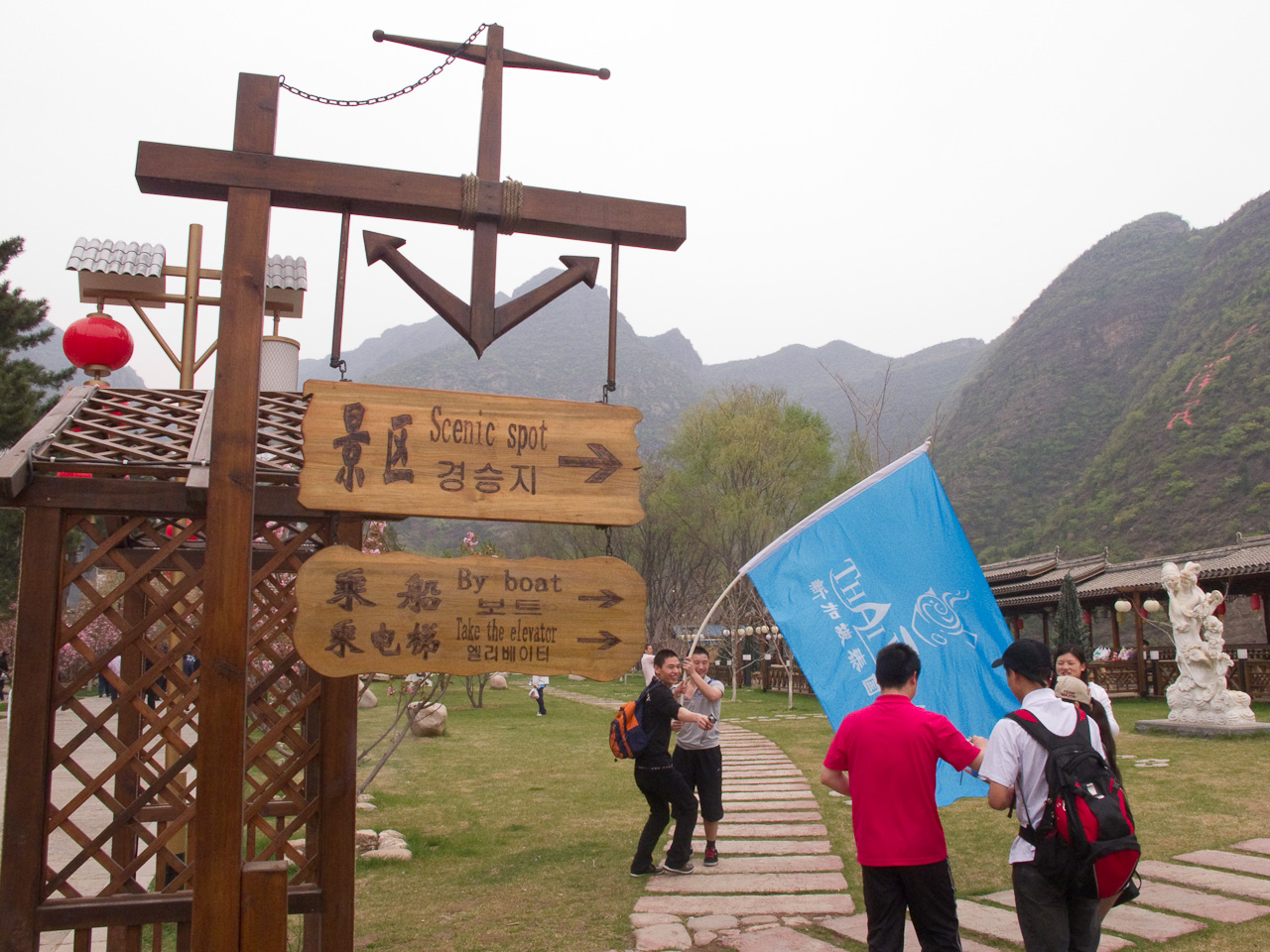 It seems every month or two, the school takes a Friday off to take us on a field trip. Having not left the city since arriving in Beijing, I was excited to breathe in some country air. The bus ride was about an hour and a half, which seems to be the magic number for getting far enough away from Beijing that you forget you’re within spitting distance of the most densely populated part of China. We arrived to the place, nestled in the mountains that miraculously spring up outside the reach of the city.
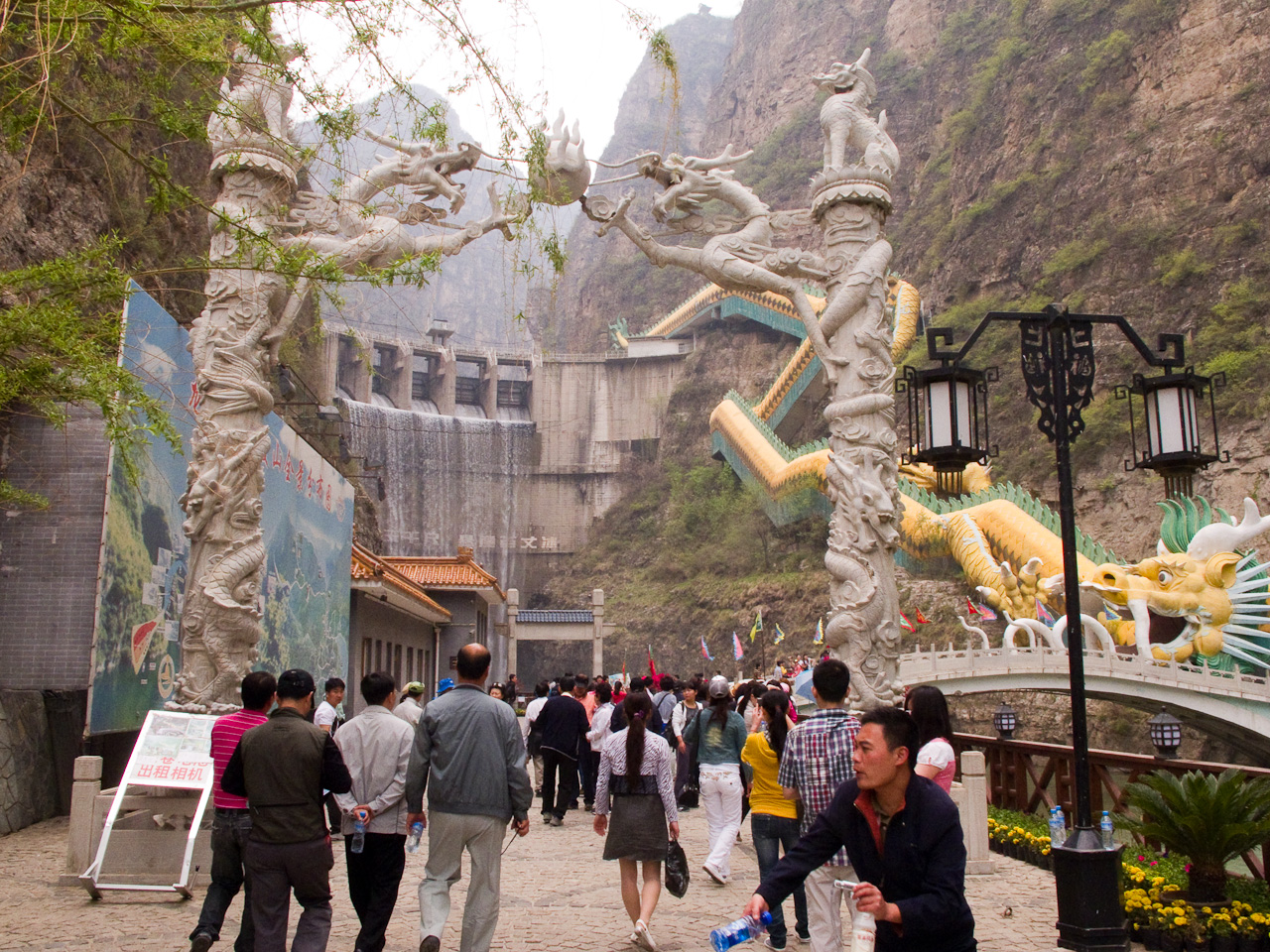
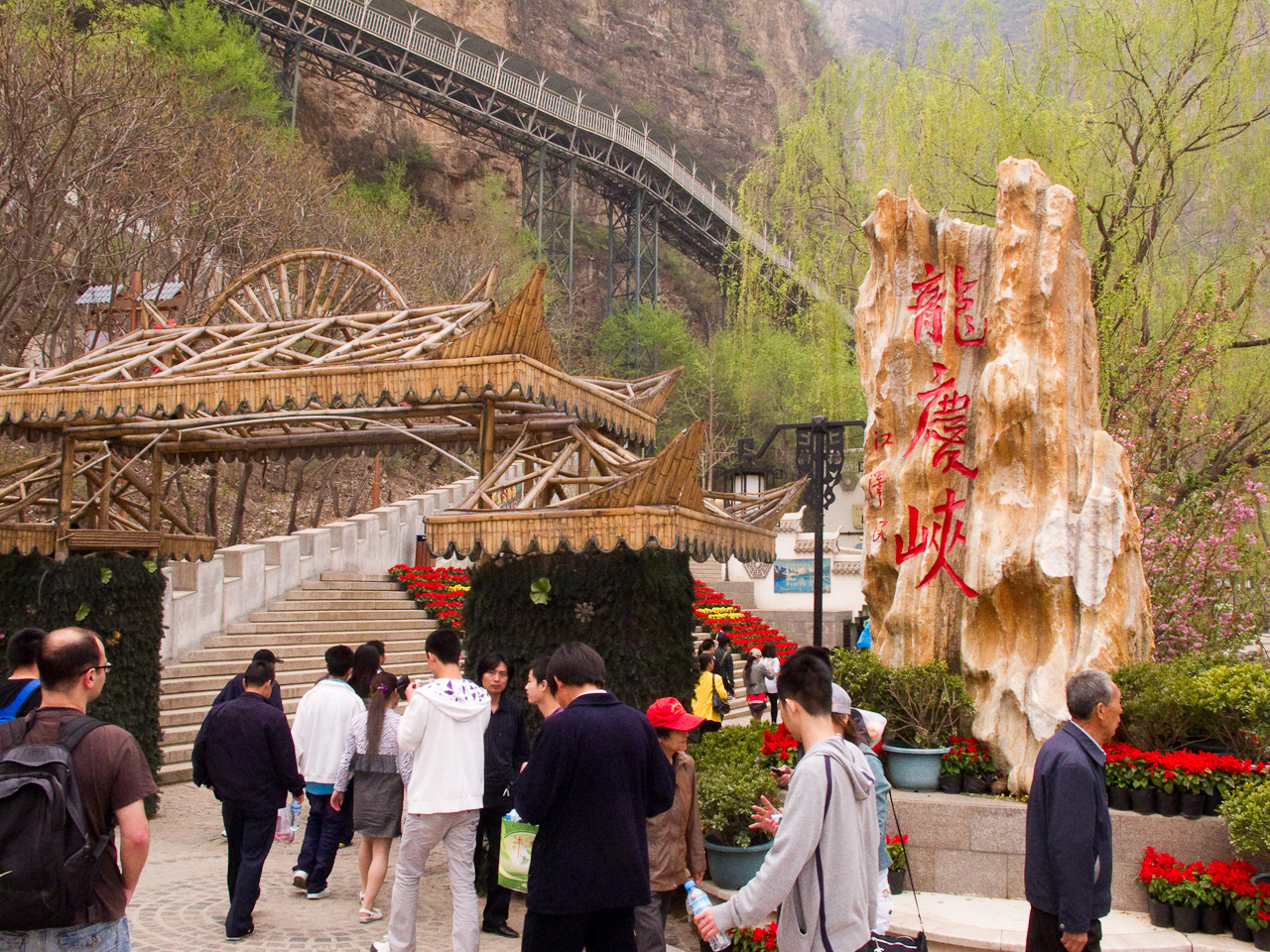
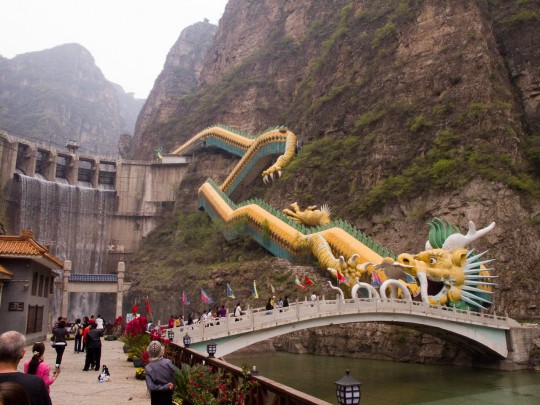
There was a small touristy area leading up from the parking lot, some sort of park. A slide of some sort snaked its way around the valley from the dam resting at the top of the hill. Everyone seemed excited to ride the slide on the way out, but it looked like the carts on it weren’t going terribly fast, like a crippled roller coaster. I’m sure there would be more interesting attractions on the way down.
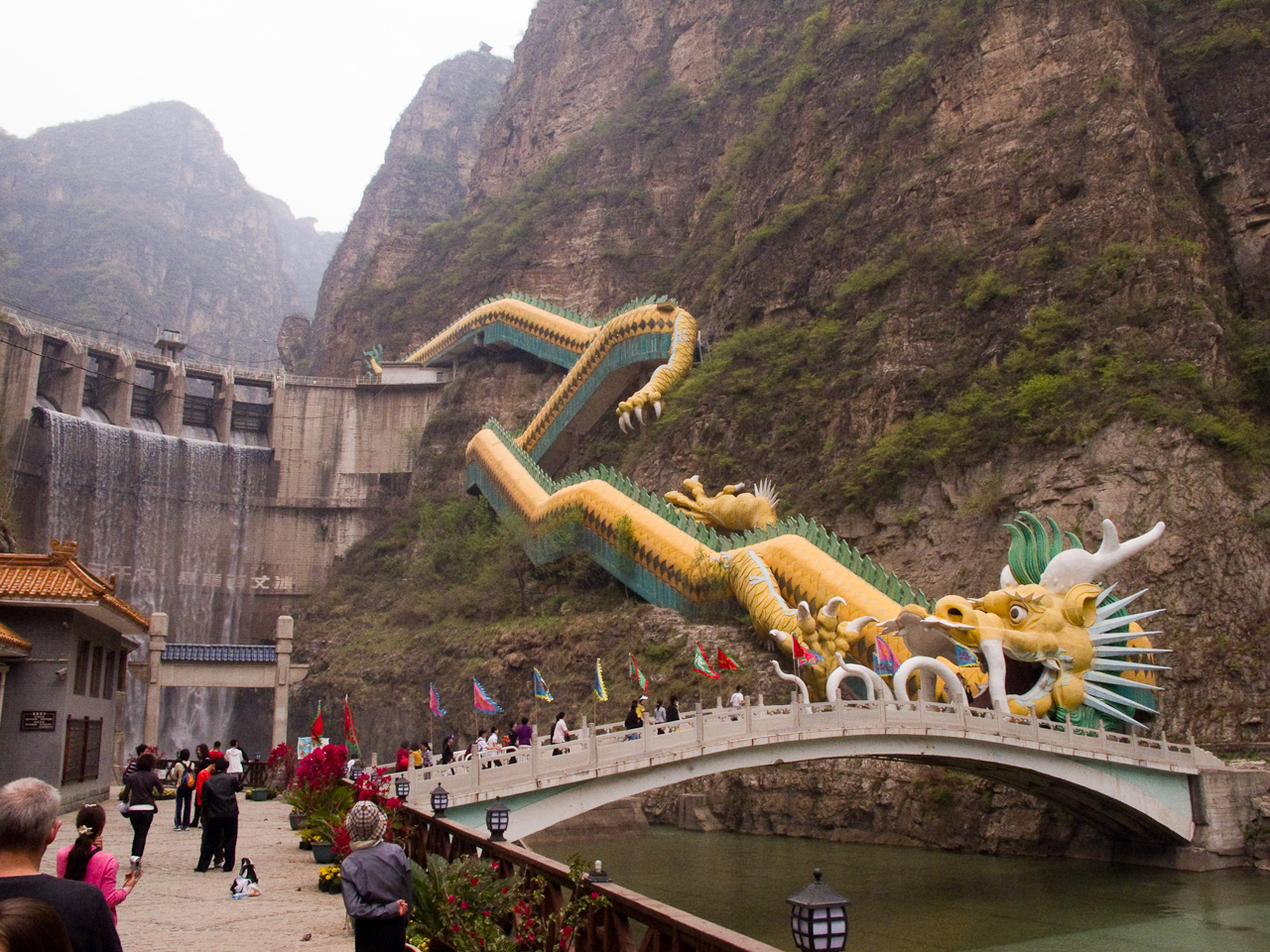
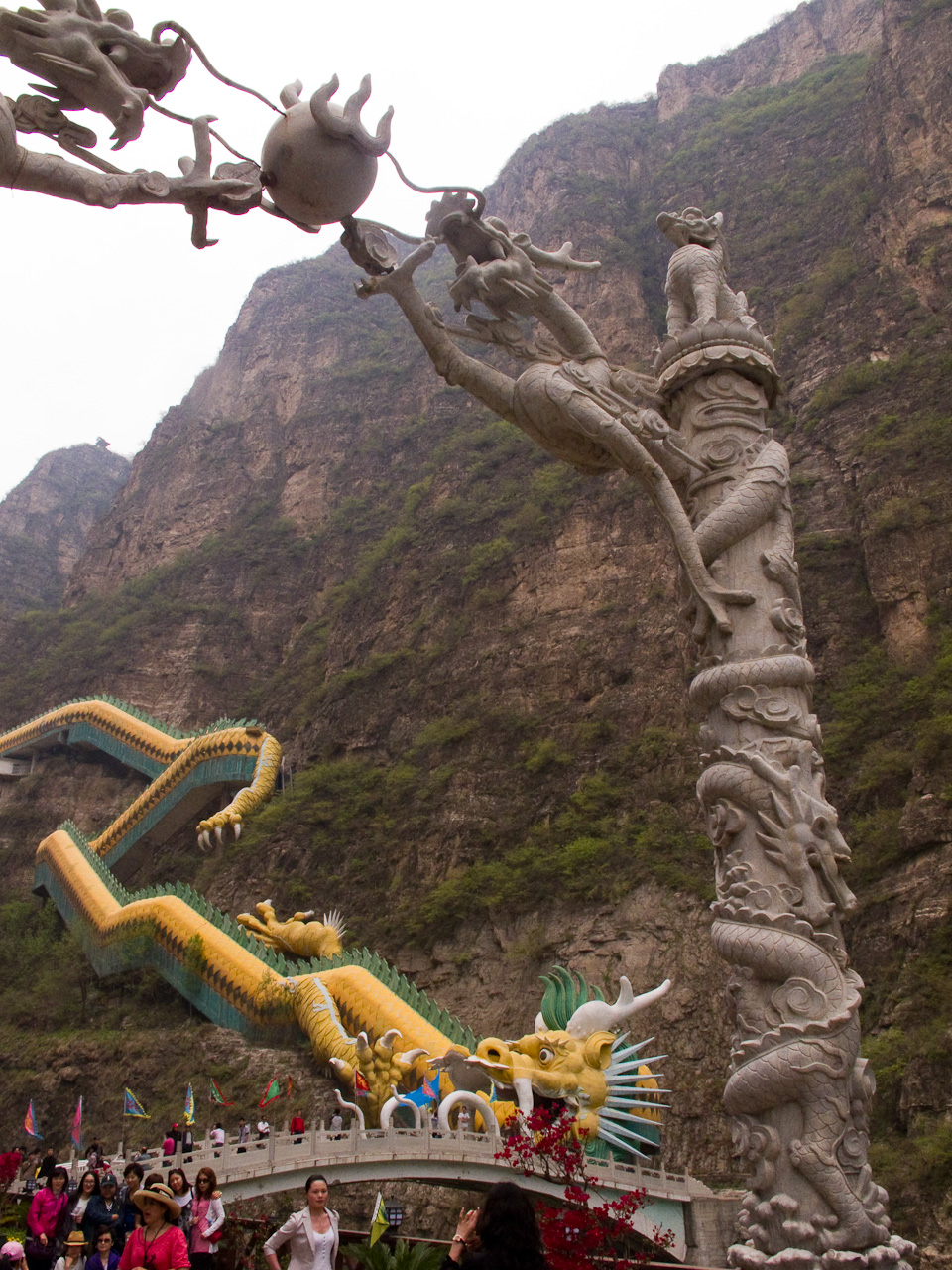
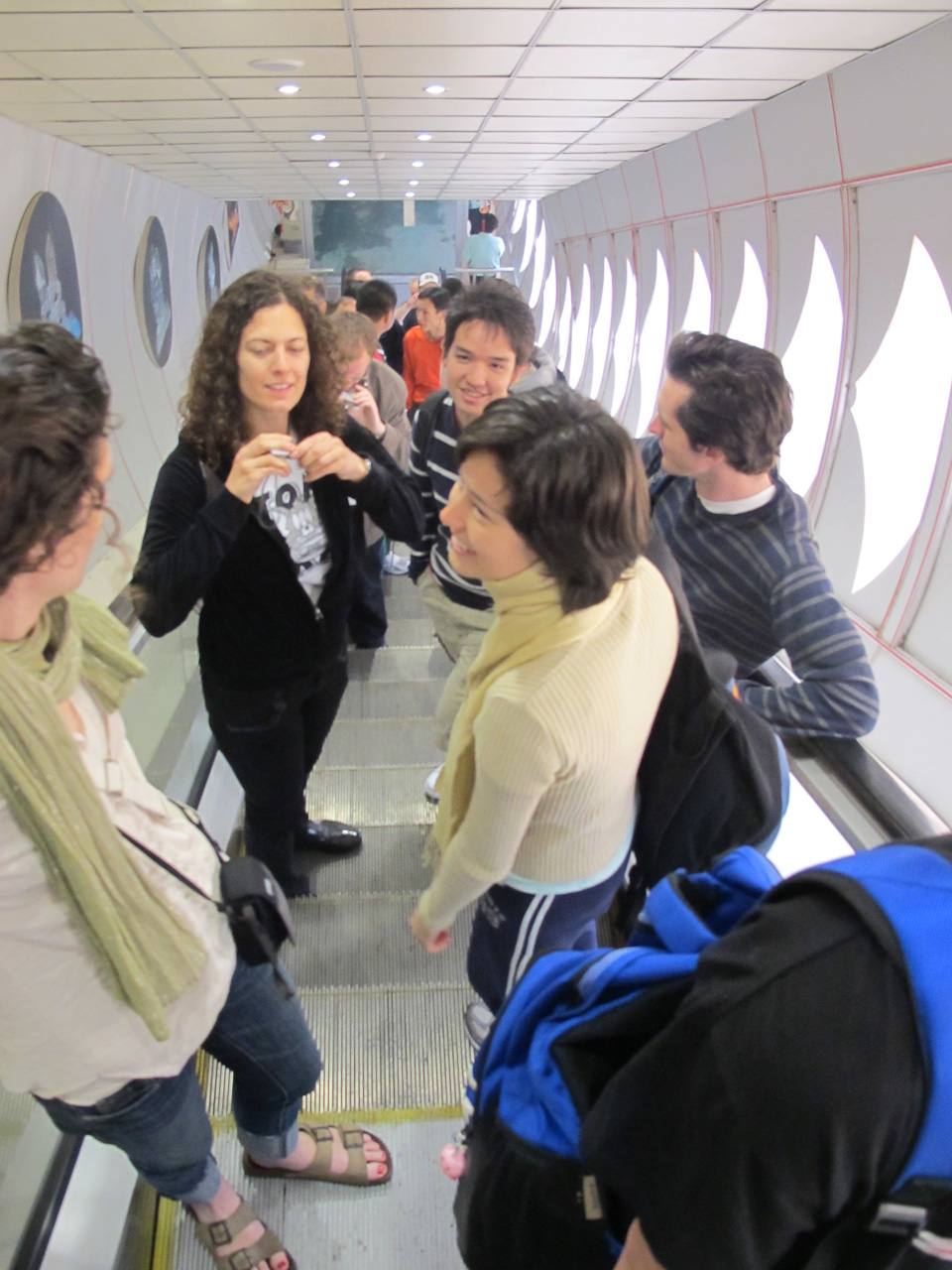
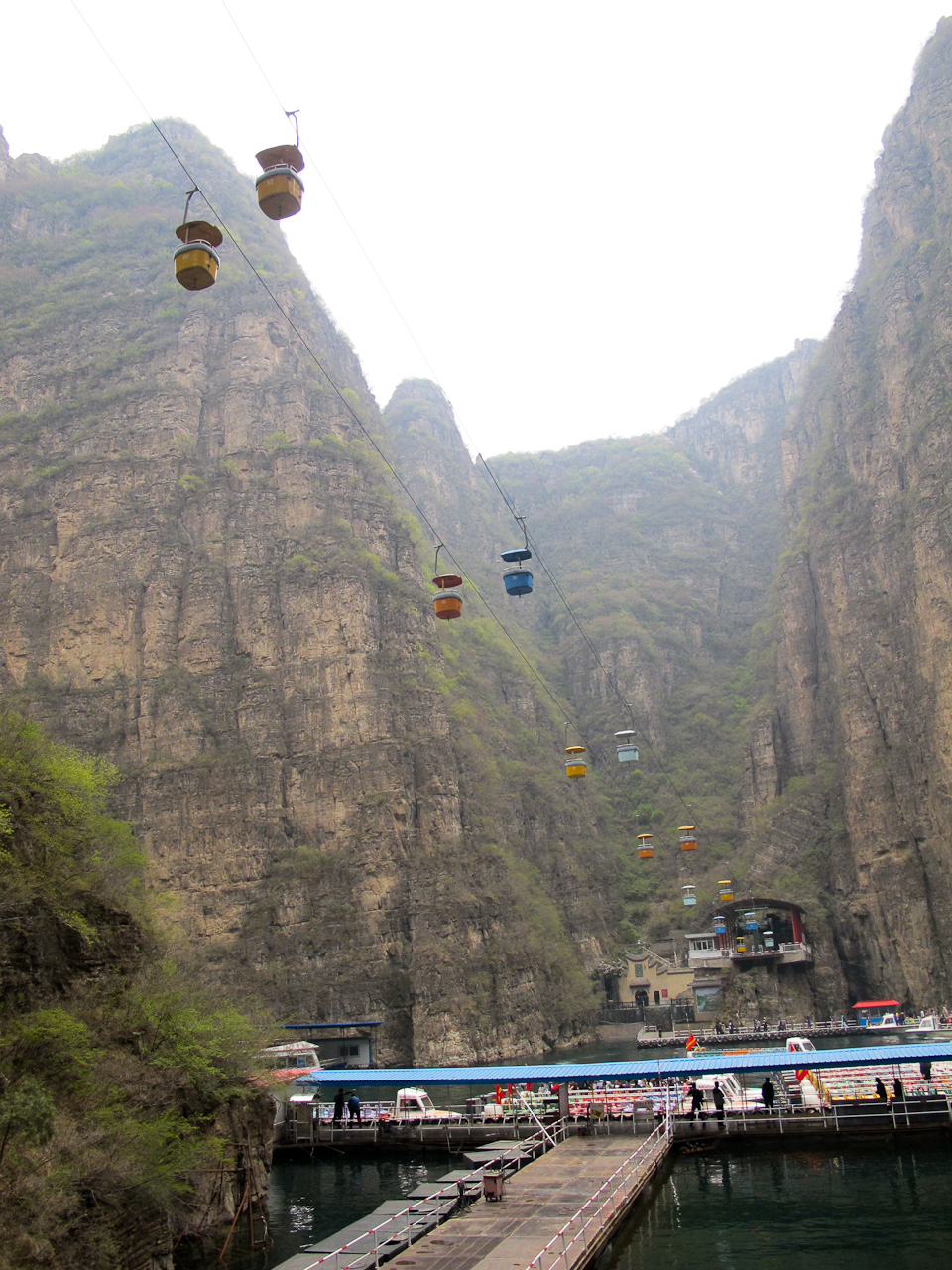
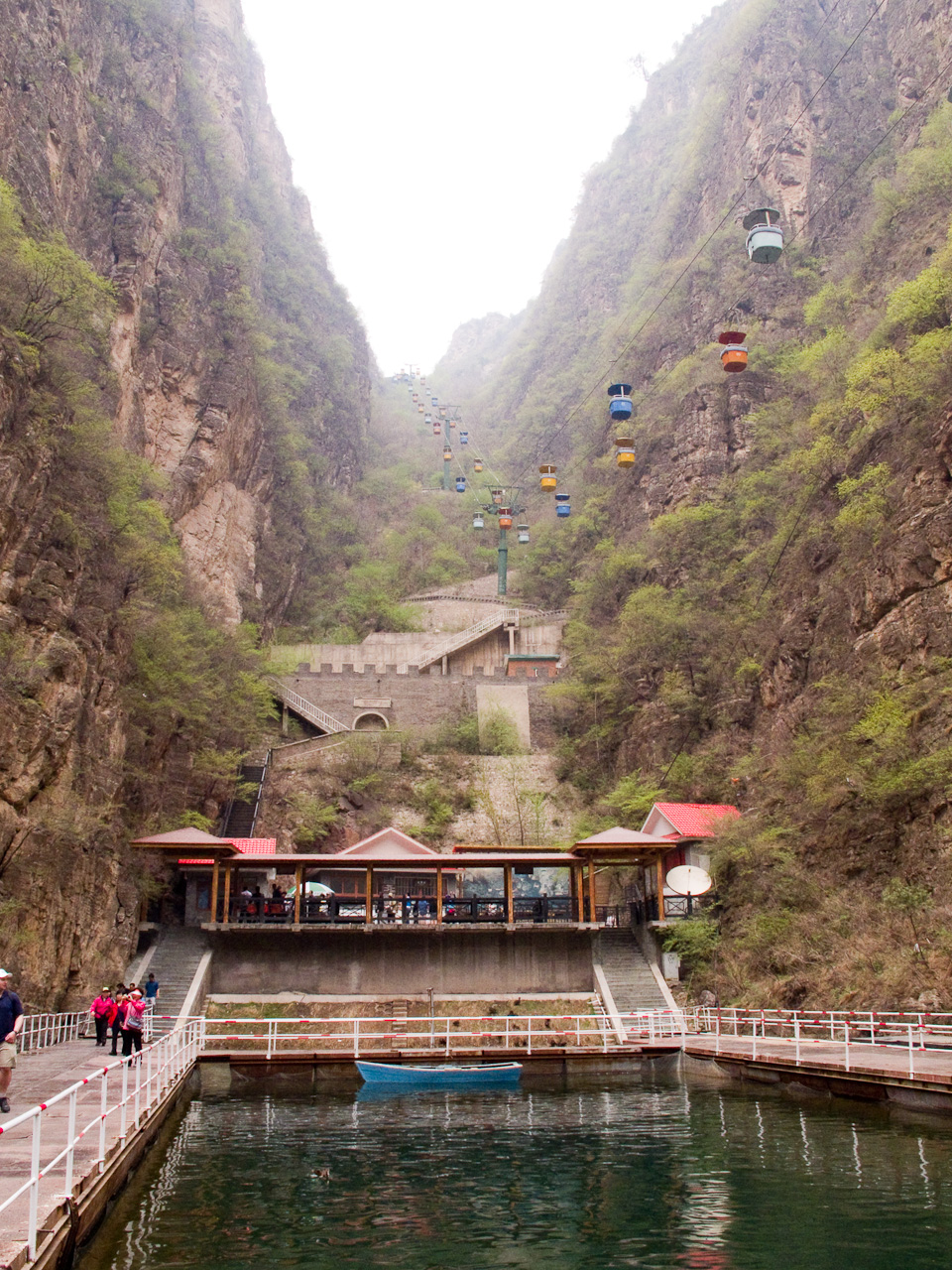
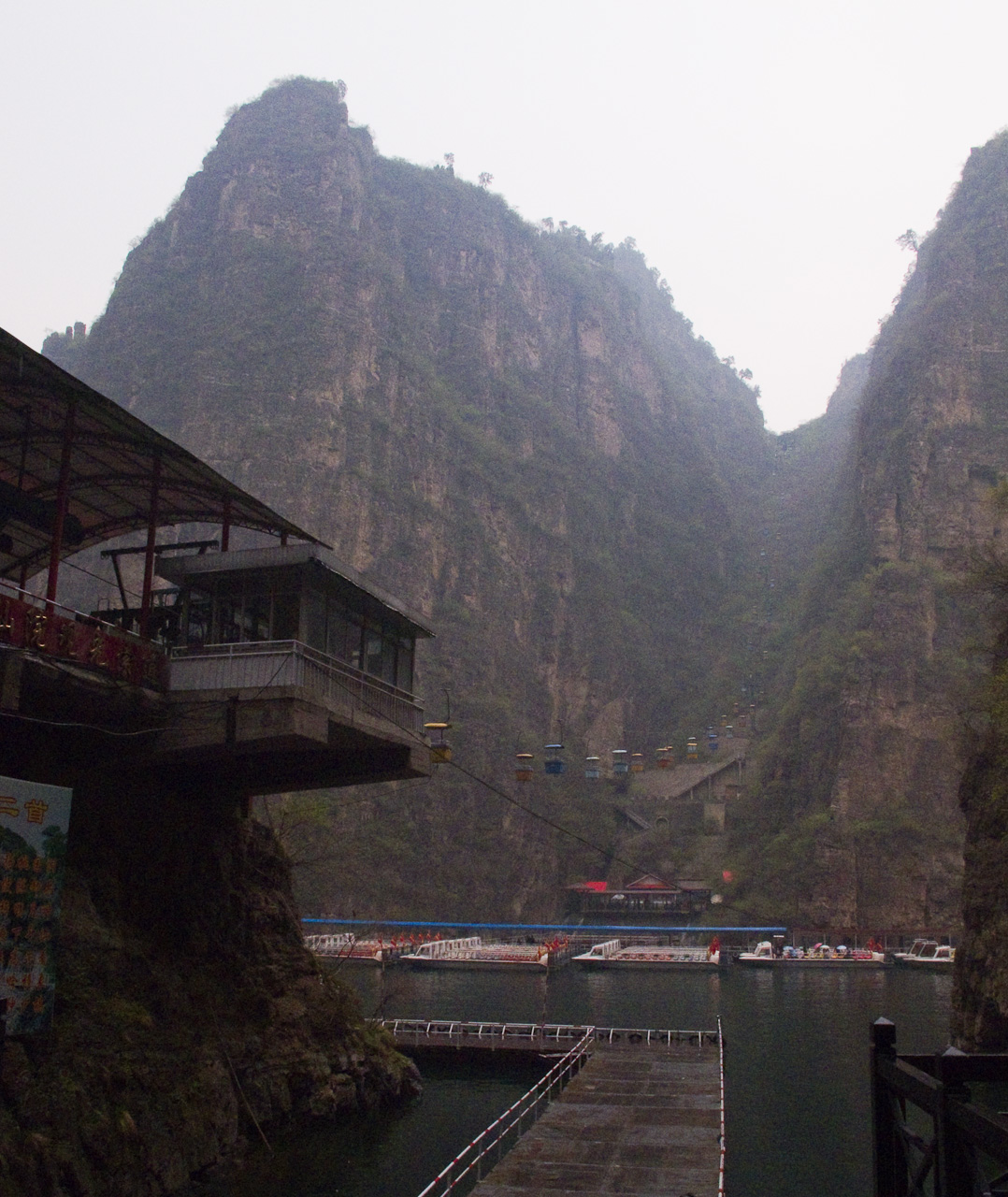
At the base of the dam was an enormous yellow dragon, mouth agape. The dragon’s body hid several sets of escalators taking us up to the top of the dam. Real classy. When we emerged from the dragon’s butt, we were standing at a ferry station. Across the lake from us was a cable car railway to take us further up into the mountains, but since we needed to take a boat to get there, we decided to do the boat tour instead.
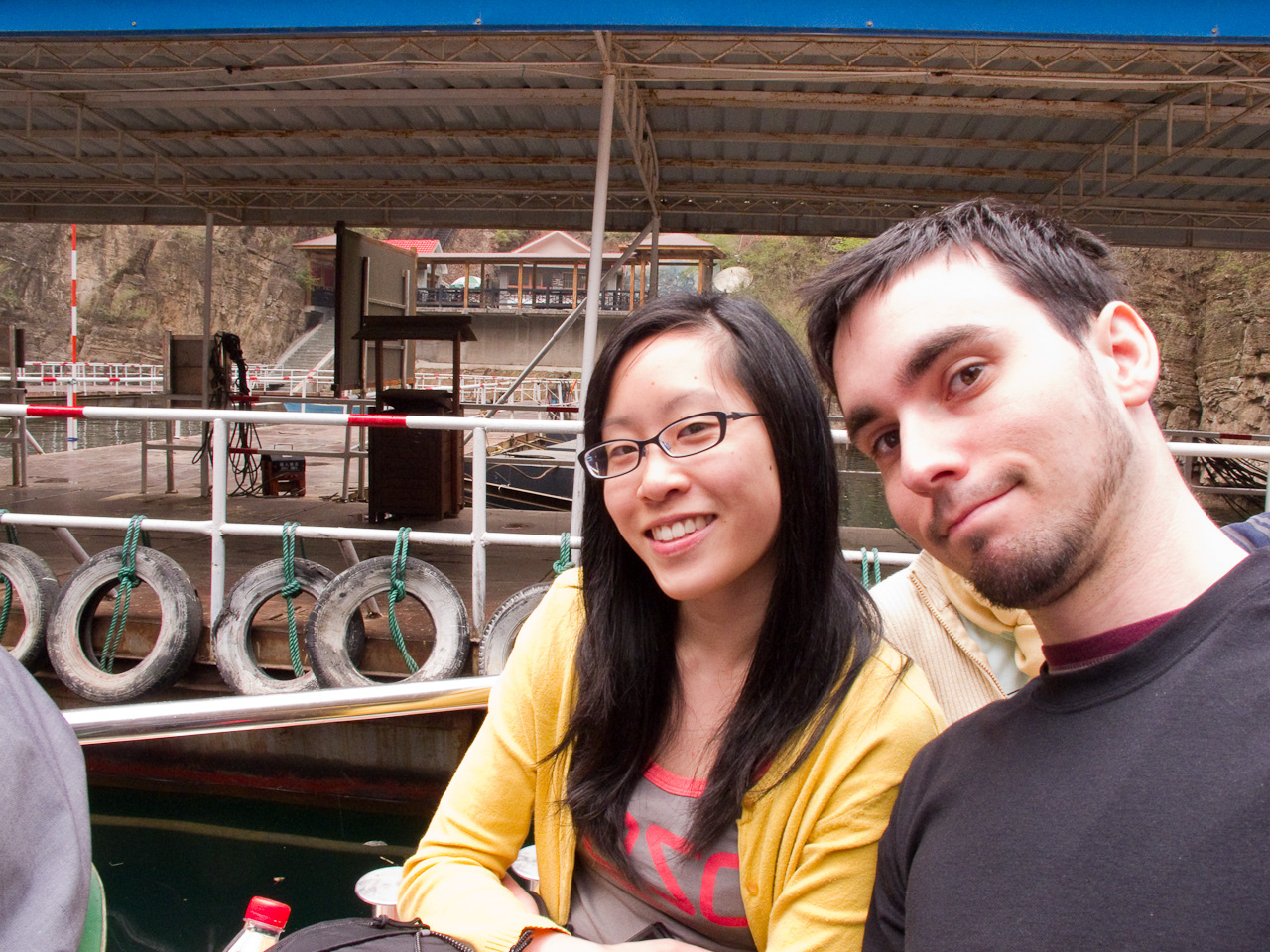
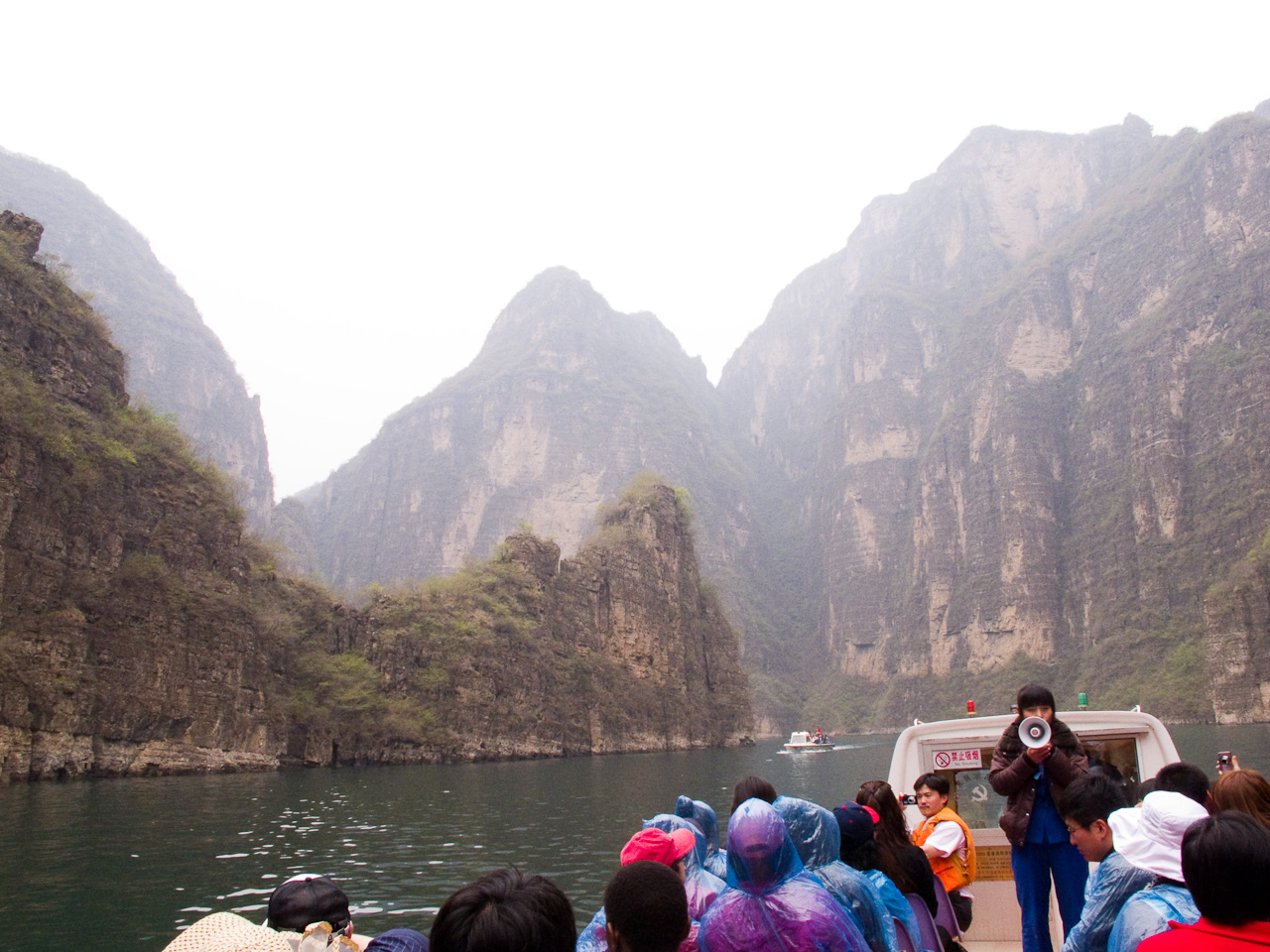
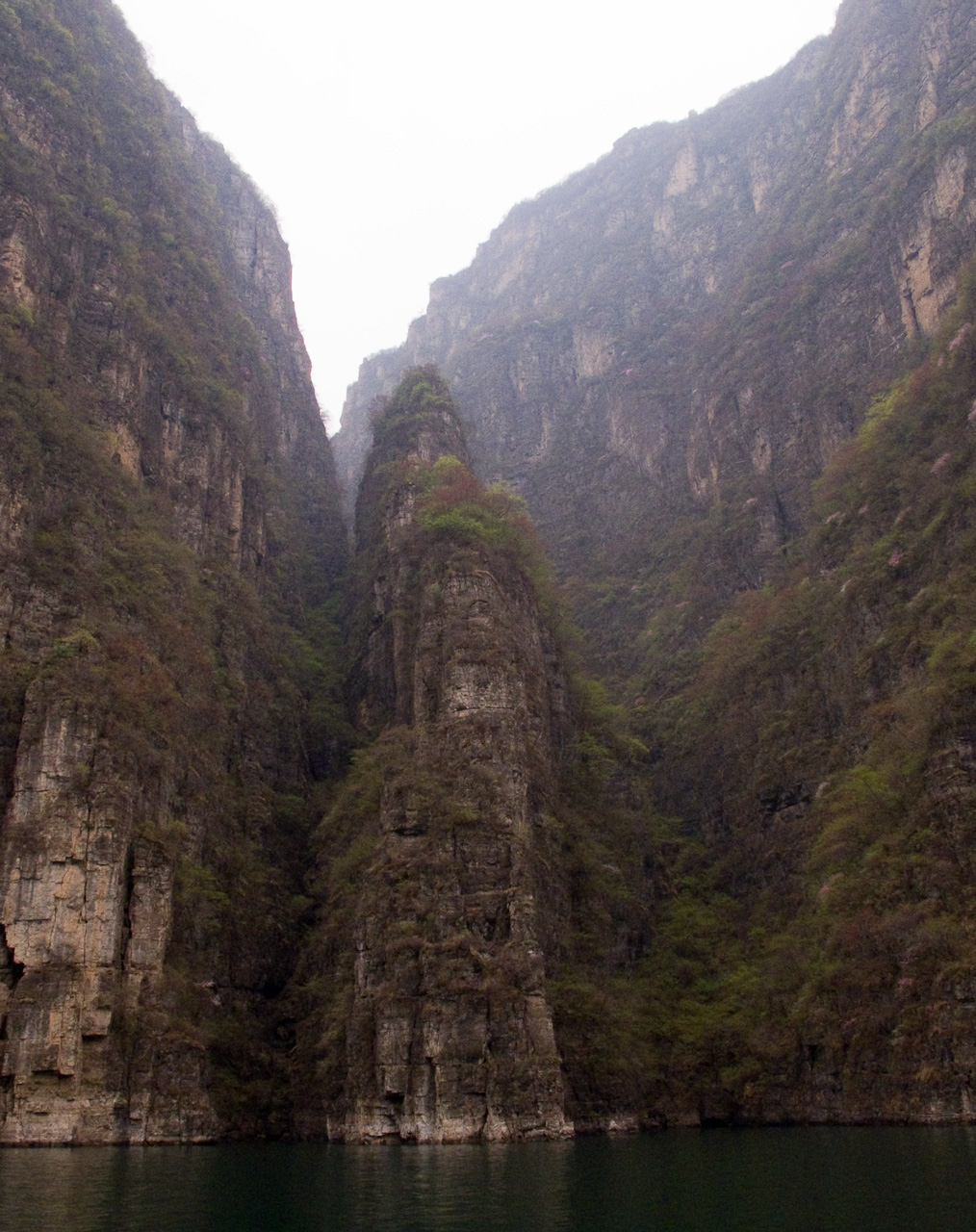
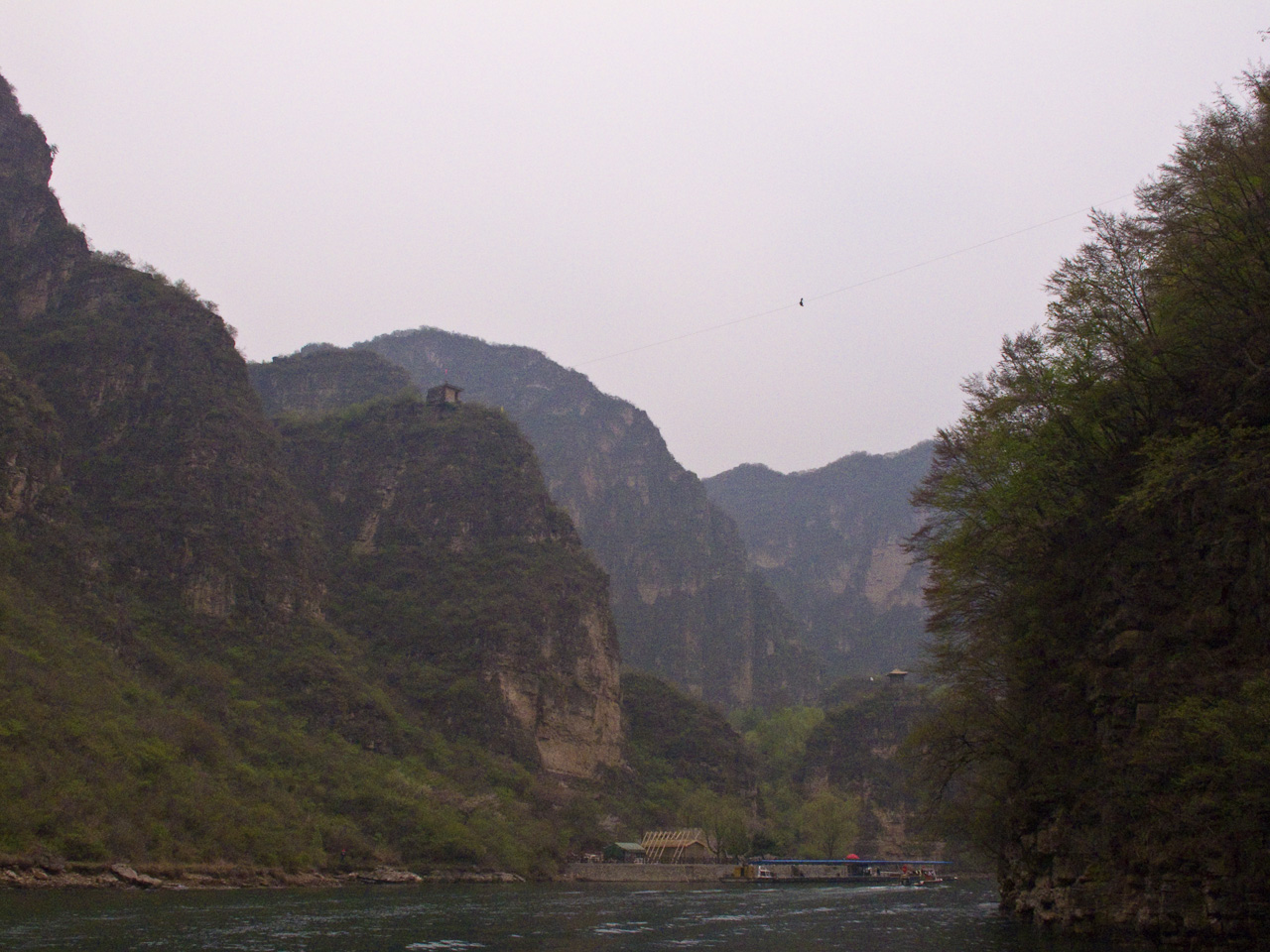
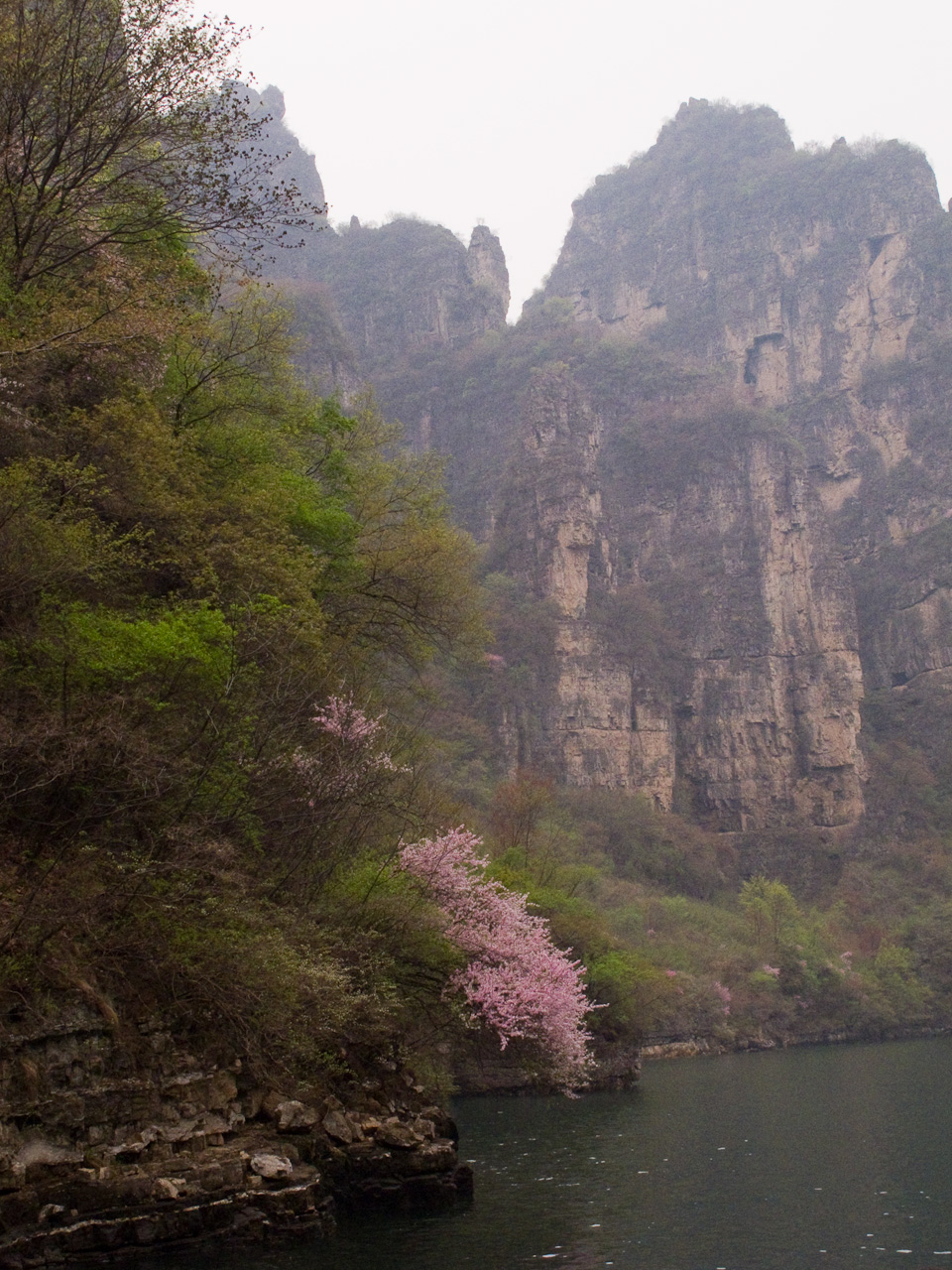
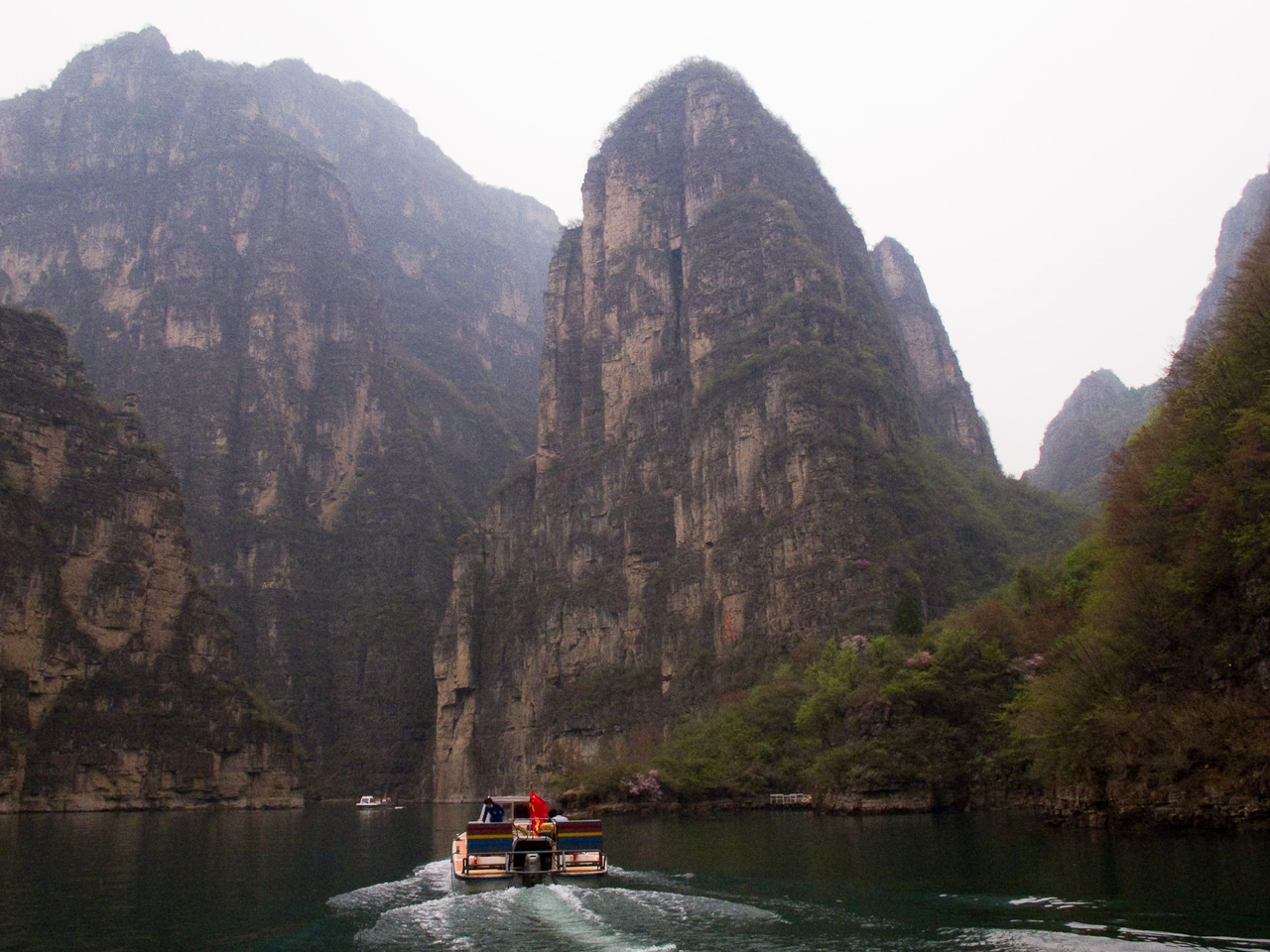
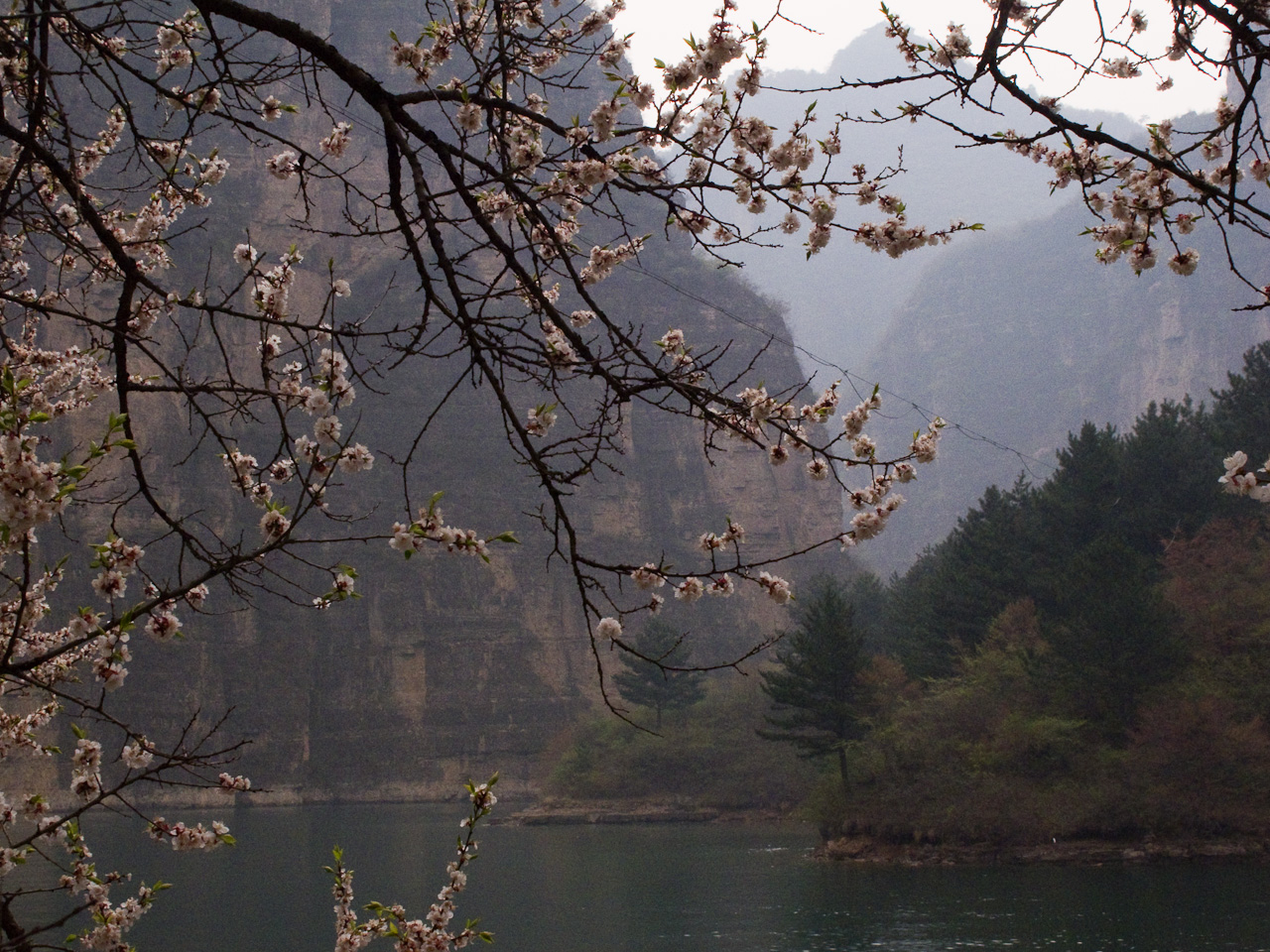
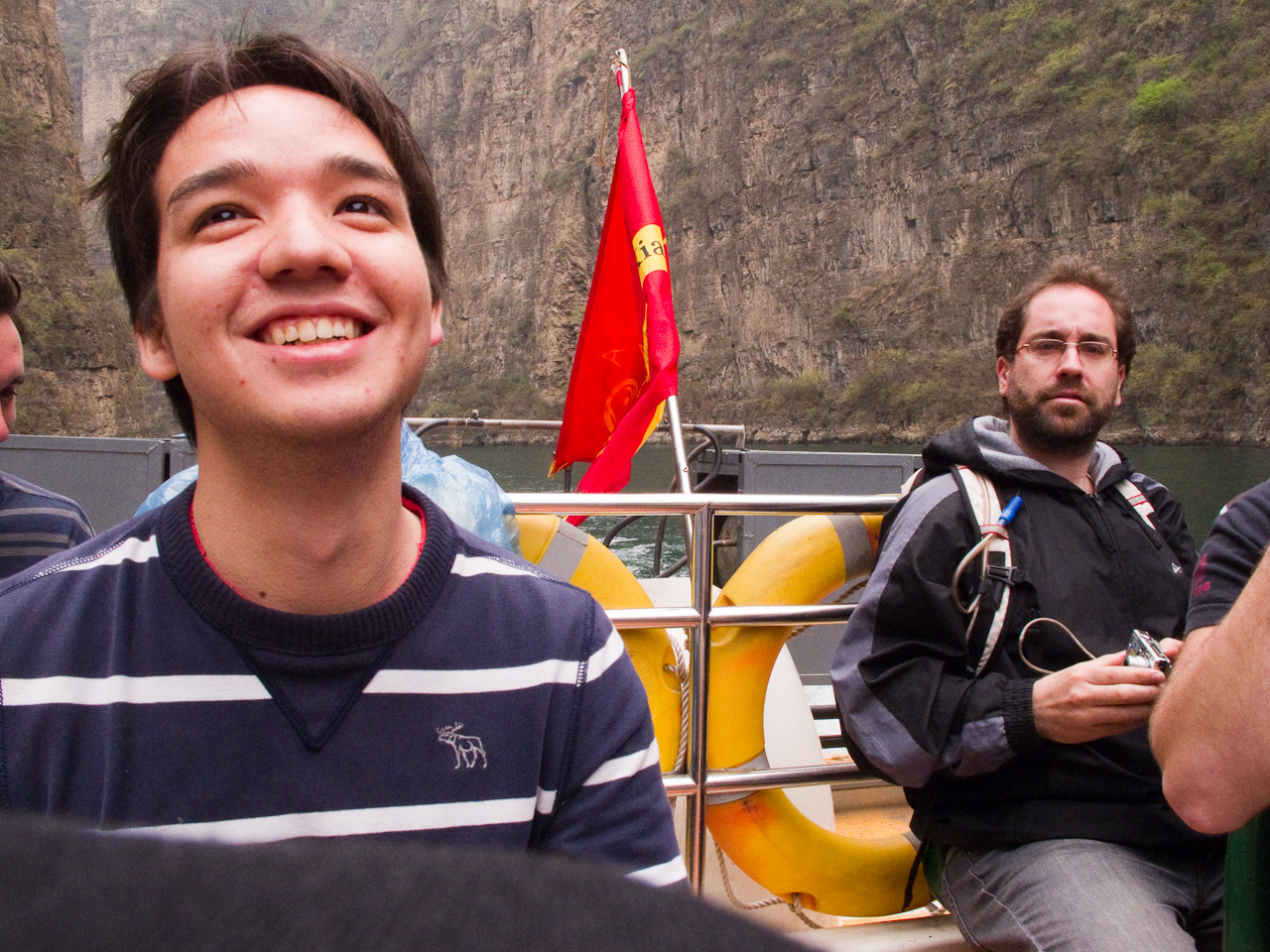 On the boat, we rode around the man-made lake, surrounded on all sides by soaring cliffs. The scenery wasn’t as spectacular as some of the places I’d been to in the south, but it was pretty impressive considering our proximity to Beijing. As our Chinese friends like to say, 有山有水, there’s mountains and water, a phrase spoken so frequently it’s synonymous with beautiful scenery and a good time. The lake wound through the mountains, and on our way to the far end, we saw a bungee platform, and just beyond it, far above, a long wire. Spinning on the wire towards the center of the wire strung up between the two cliffs. That looks fun, I remark to the boat guide, “can I do that?” They laughed and said I could bungee but I should leave the wire walking to the professionals. One day…
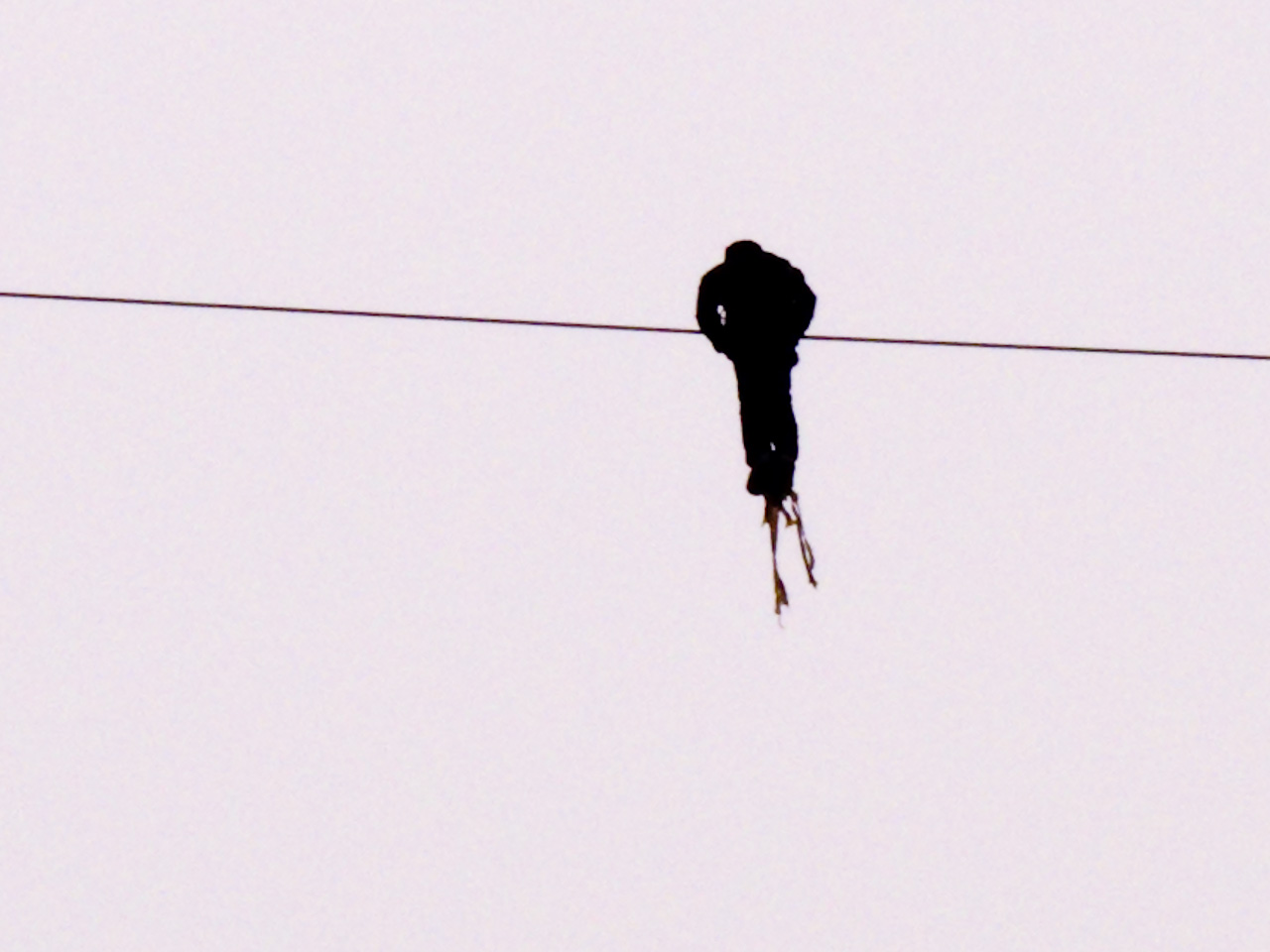 We reached the cove at the end of the valley and turned back around, stopping under the guy still hanging out on the wire. We hopped off the boat and walked through a small row of shops leading up to the bungee platform almost 50 meters above the water. Carl and I looked at each other, shrugged, and walked up to the counter. We carefully read over the safety warning sign, which read thusly:
INTRODUCTION TO BUNJEE AND SWIFT FALLING
Swift falling is the common method that is used for going through the cliff, mountain streamin the sport of mountaineering adventure. The present Swift falling device has been improved, which is safe as well as stimulate, integrating the practicability and the amusement together. Under the circumstance of adventure without danger, you can not only practice you operation skill but also enhance the courage.
The Swift falling is constructed by the national mounteering team, and the main equipment are imported from abroad, which is safe and reliable. This scenery spot is located between two cliffs of beautiful Longqingxia Mountain, when you fly, the blue sky is above you and the green water is flowing at the bottom of foot, with the total length of 200 meters, and the natural fall of 30 meters so that can be equivalent to rock-climbing and parachute jump integrating the skill and the courage; therefore, it is the sport that human beings challenge to the limitation. This sport originated from the small island of the south Pacific has been extensively developed in New Zealand, Fiji, USA, Canada, UK and Japan, and now it is bringing in China.
The sport can bring you to experience all kinds of fancy feelings, such as terrifying, craziness, shouting, screaming, cheering and relaxing, thus, it is the sport of the brave people, which need to overcome yourself at first and then you can face the whole shoot. Longqingxia Bunjee is designed to locate at the cliff of the Jingang Temple with the height of 48m by the Design Institute of National Defence Scientific and Industrial Council, and the main equipment are adoped the American ADA system facilities with the good performance and the high safety factor, integrating the safety, fun and excitement together.
-Longqingxia Mangement Department
With a safety board like that, who wouldn’t go through with the jump!? Everyone else commented on how sketchy is was to bungee jump in China, but were more than happy to gather on the edge of the cliff to watch us jump. They strapped our ankles to the point of pain. Carl went first, waddling out onto the platform and diving almost without hesitation. As I stood up for my turn, everyone told me to take a second so they could get photos, since Carl jumped too fast. I got out onto the platform, and when the guy kicked the cord off the edge it almost took me with it. I think I know why Carl dove so fast. Waiting for everyone to get their pictures, I looked down and realized just how high up I was, and remembered my fear of heights and my greater fear of equipment failure. Too late now, I took the plunge. Cutting through the air like a block of clay, I could feel the cord stretch as I reached the bottom of the jump, just an arm’s length from the water. The tightening cord transferred all the inertia into my body, sending 80% of my blood directly to my head. At the lowest point, the potential energy building up in the stretched bungee slowly but forcefully flung me back into the air about 80% as high as the platform. After bouncing a few more times, I was lowered down to a waiting boat and rode back to shore. In all it was a fun experience, worth the hefty (by Chinese standards) price tag.
httpvh://www.youtube.com/watch?v=SwByb7RF3I0
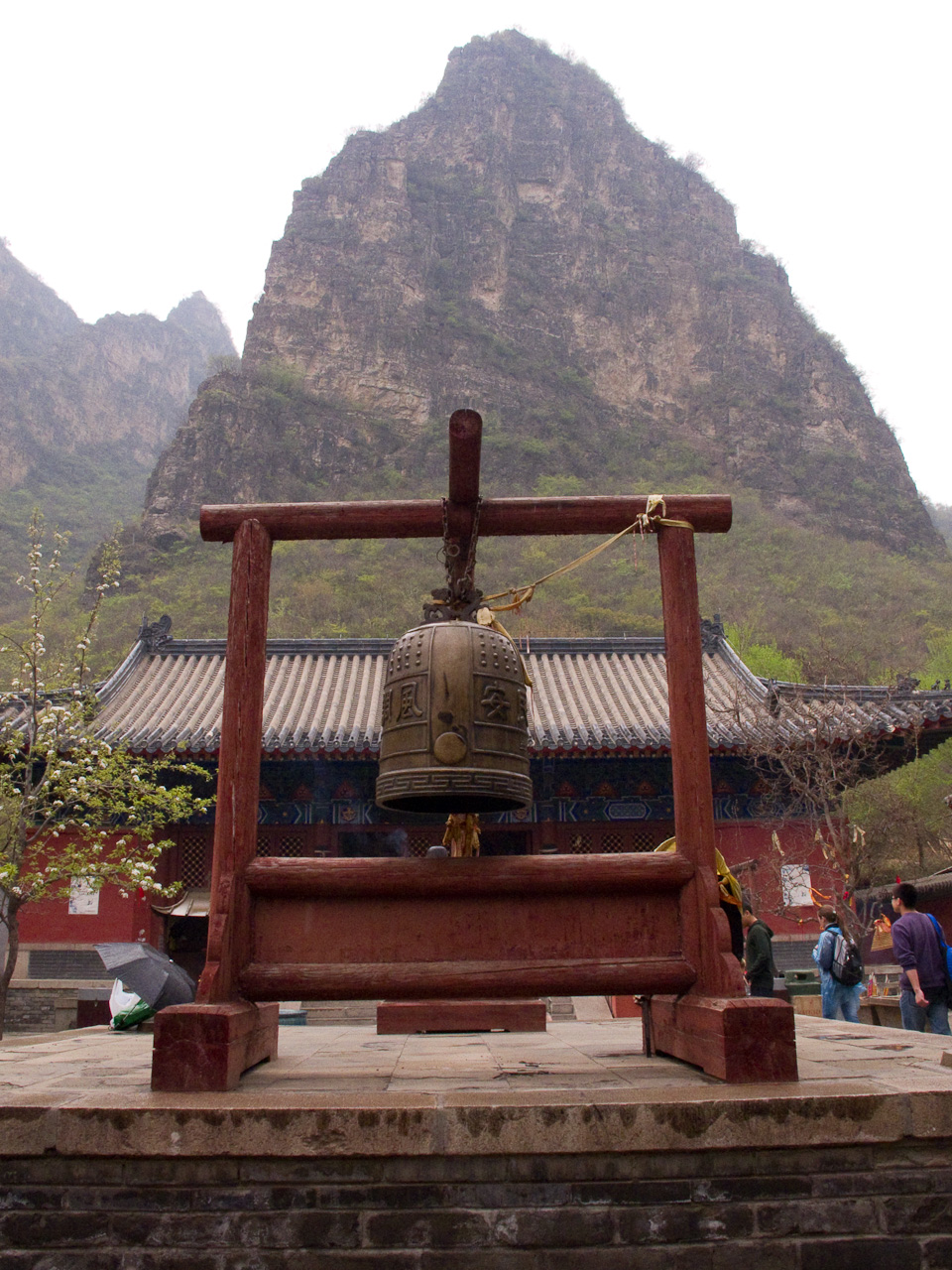
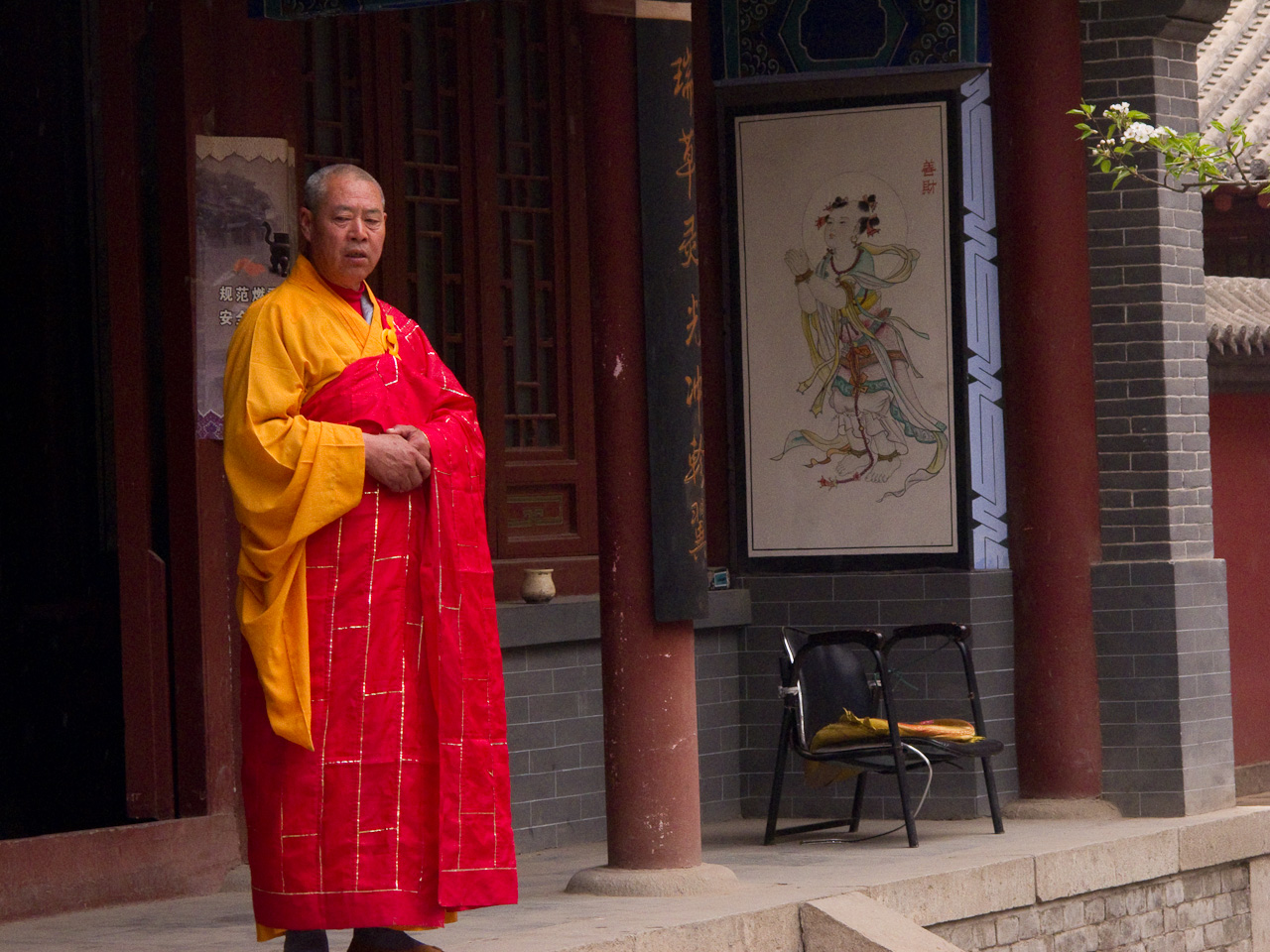
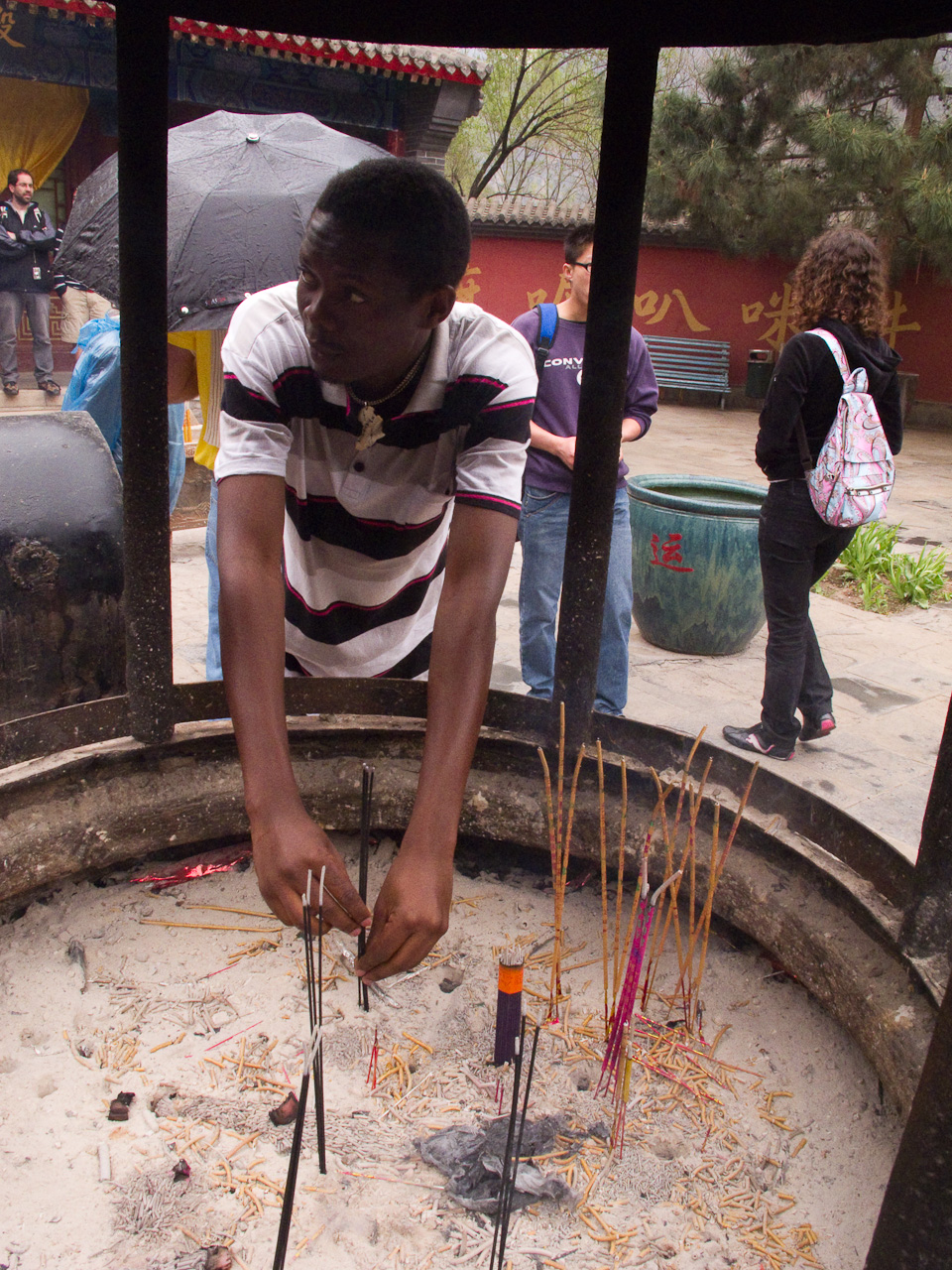
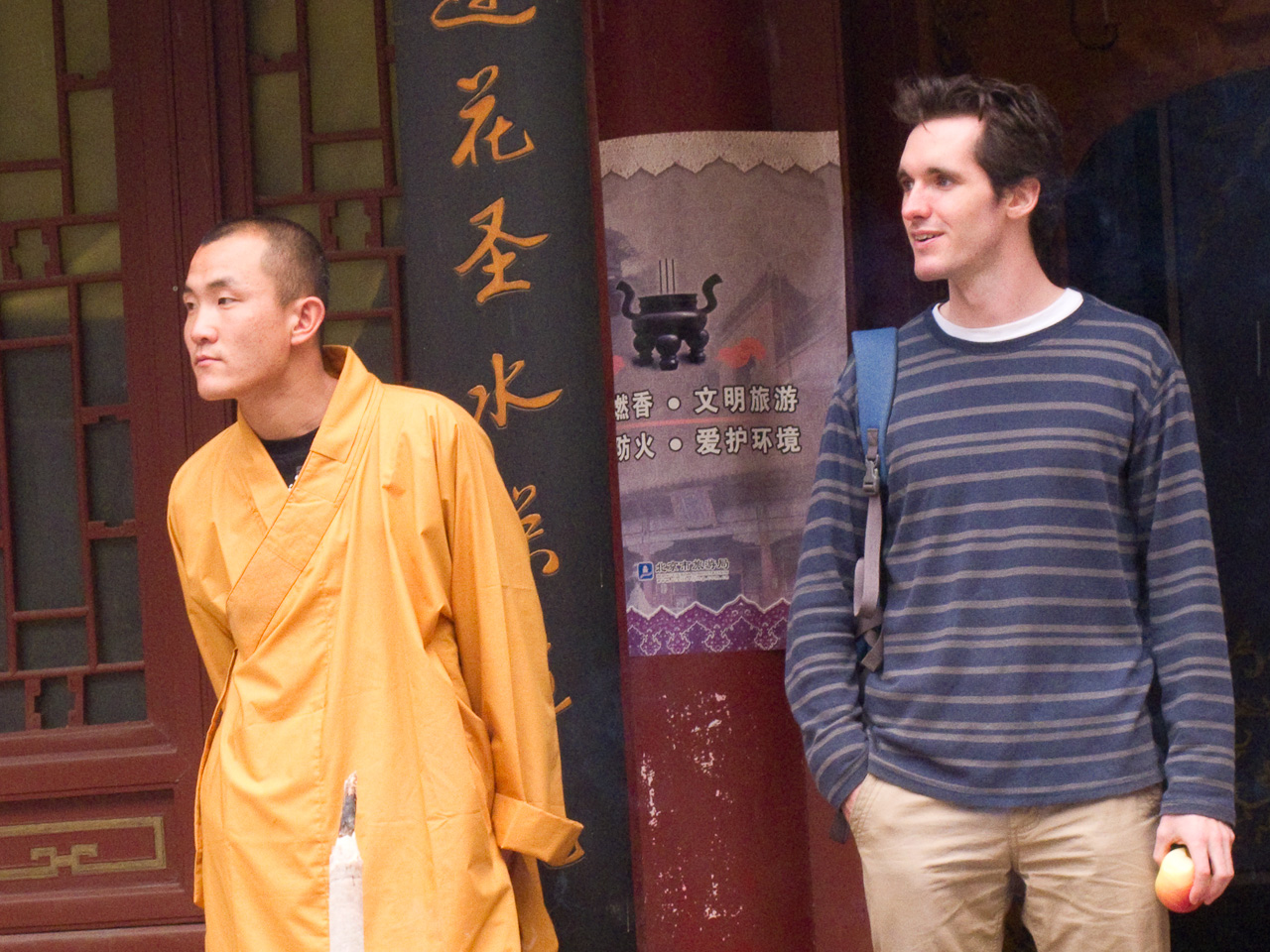
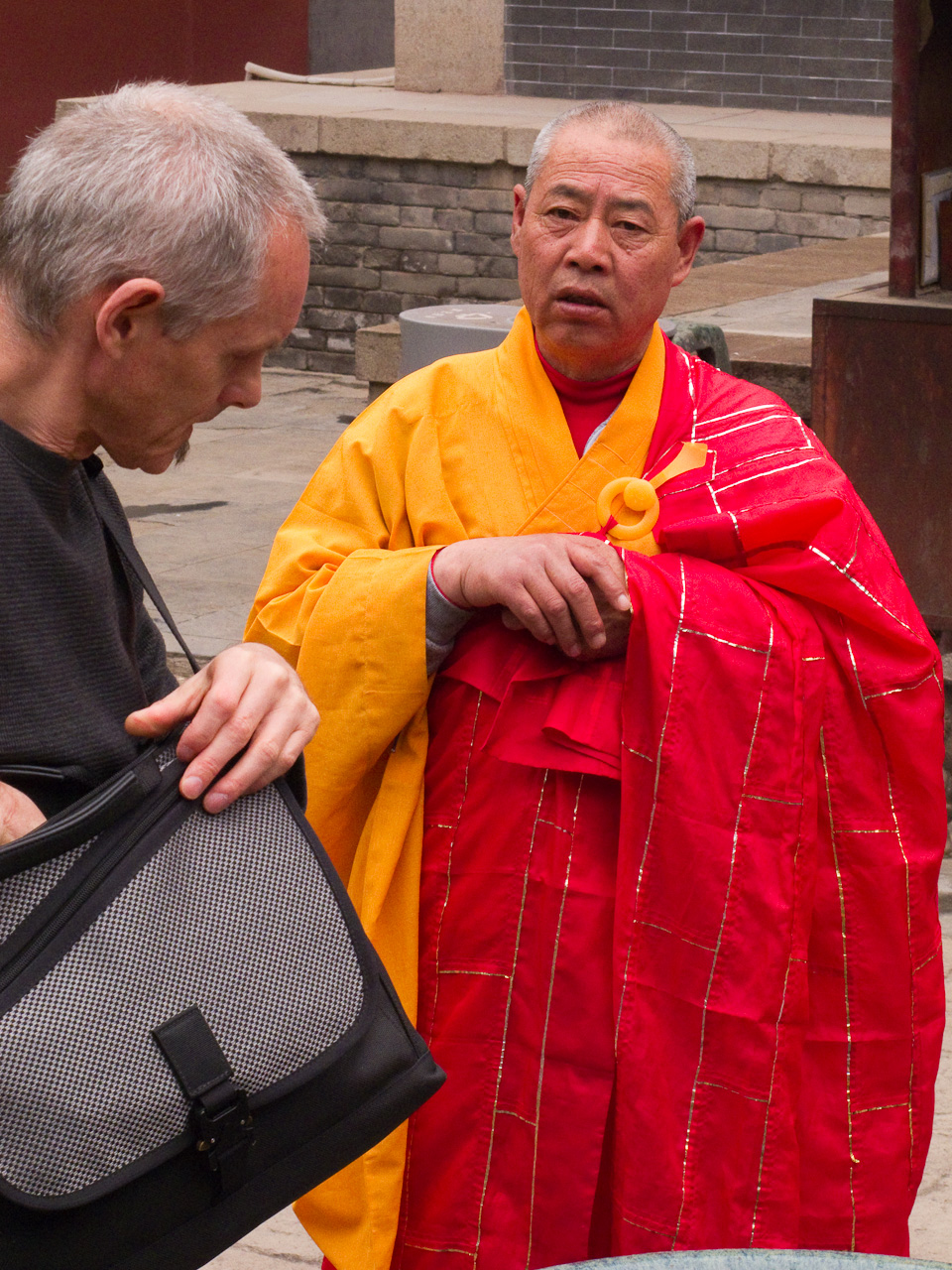
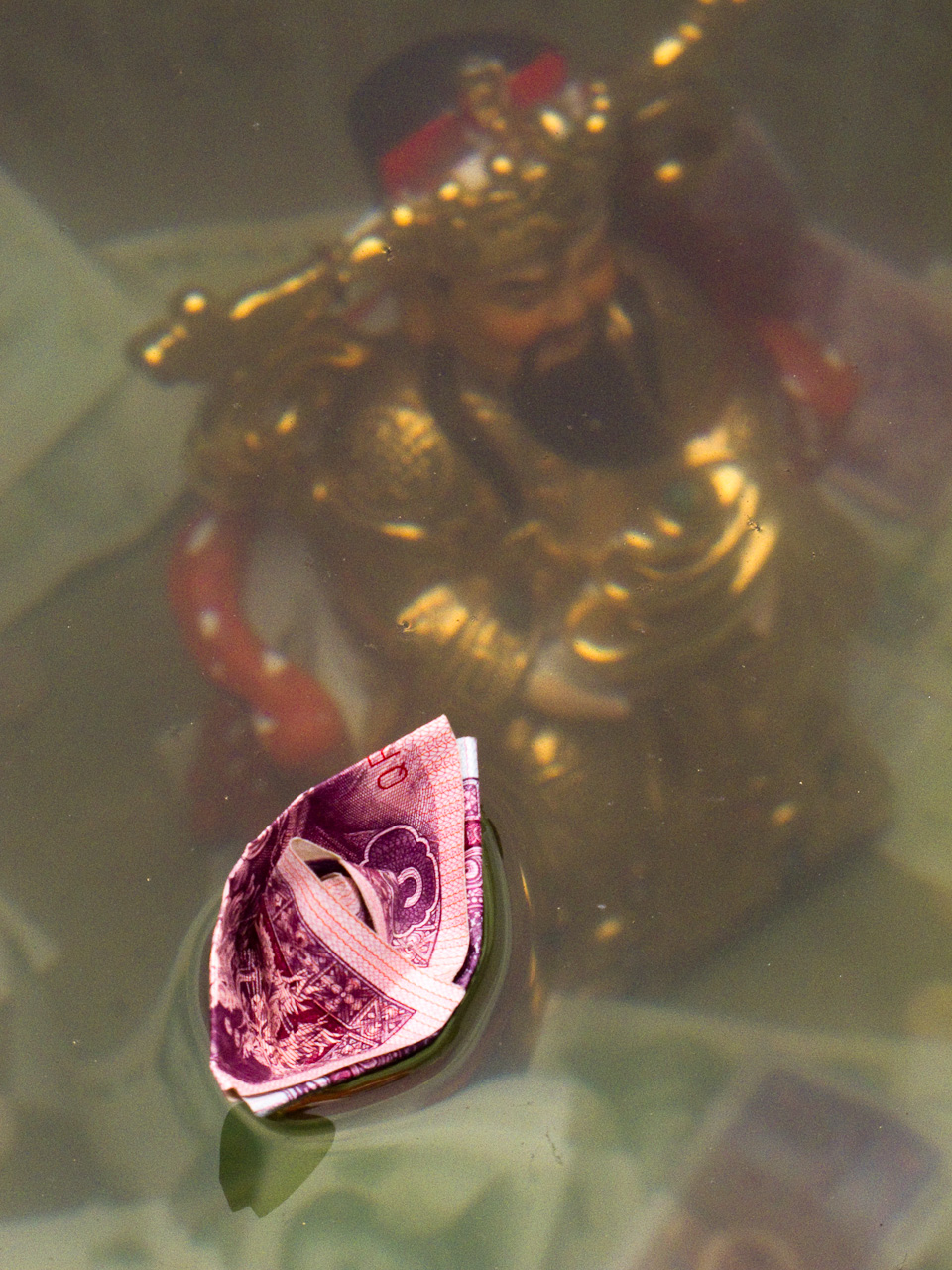
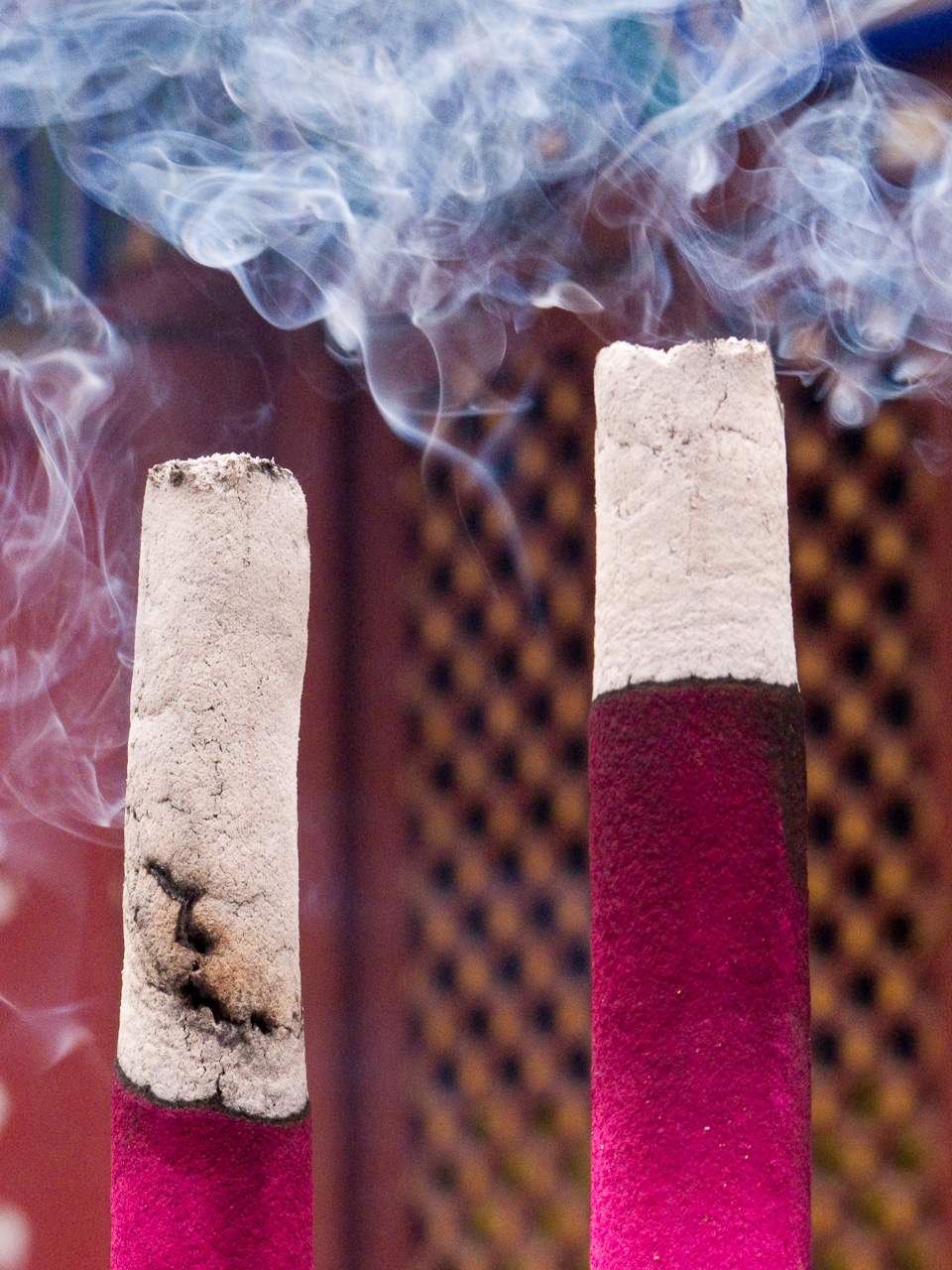 We hiked up to the temple nestled into the hill overlooking the bungee platform and loitered around the grounds for a while. Bill was having great fun chatting up the young monks, and several people made donations to the various deities worshipped there. Two large vases filled with water had figurines at the bottom, surrounded by alms. Some people dropped in a 1 kuai note, making sure to soak the note first to let it sink to the bottom. Someone folded an origami ship and set it on the water above the god’s head. Adrienne’s donation qualified her to ring the bell in the courtyard, which resonated deep within our chests for minutes after the sound had ceased. As we left the temple it starting to drizzle, and some people started complaining so we decided to head back, forgoing the cable cars and whatever majesty lay beyond in the hiking paths above us.
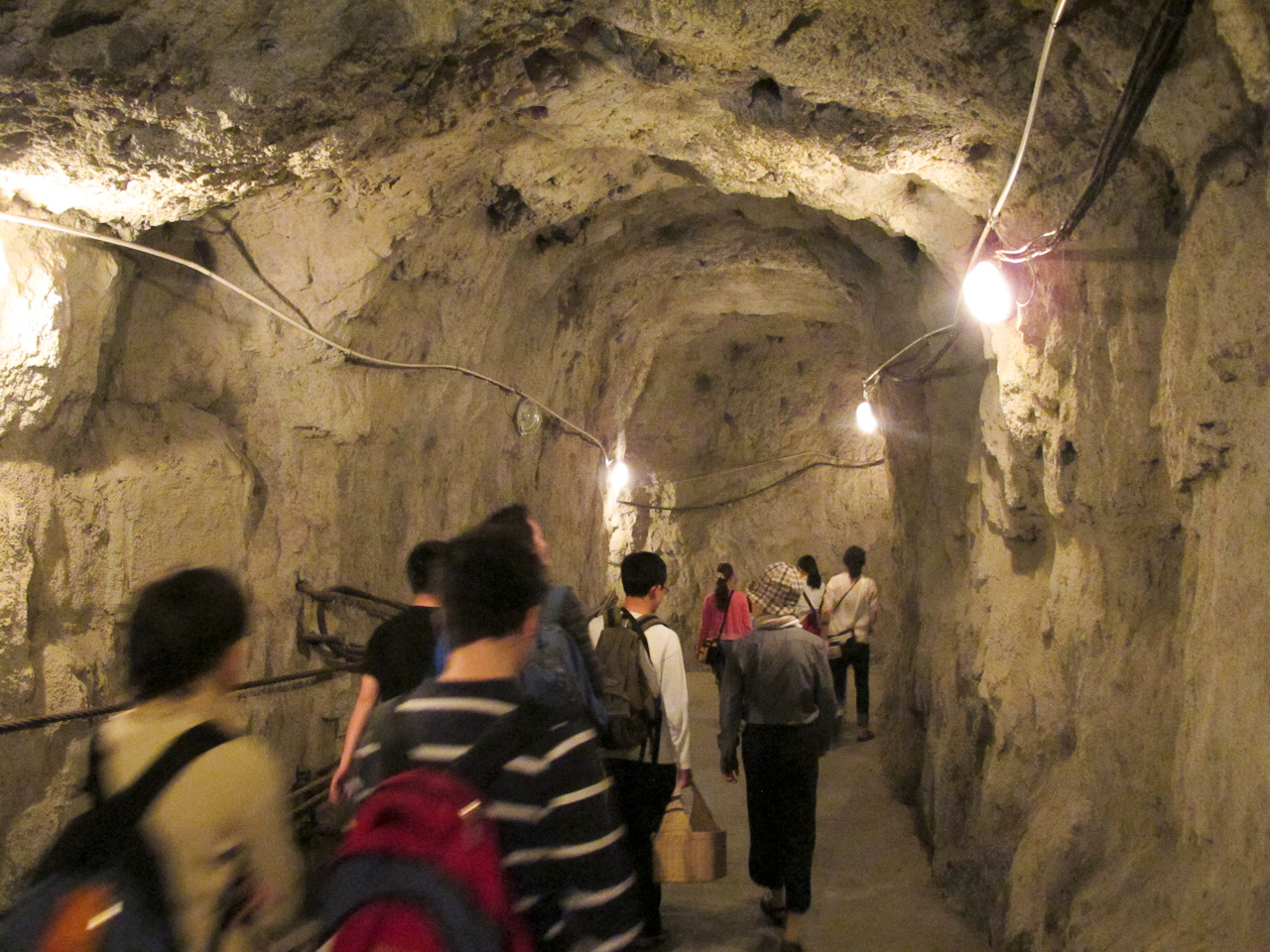
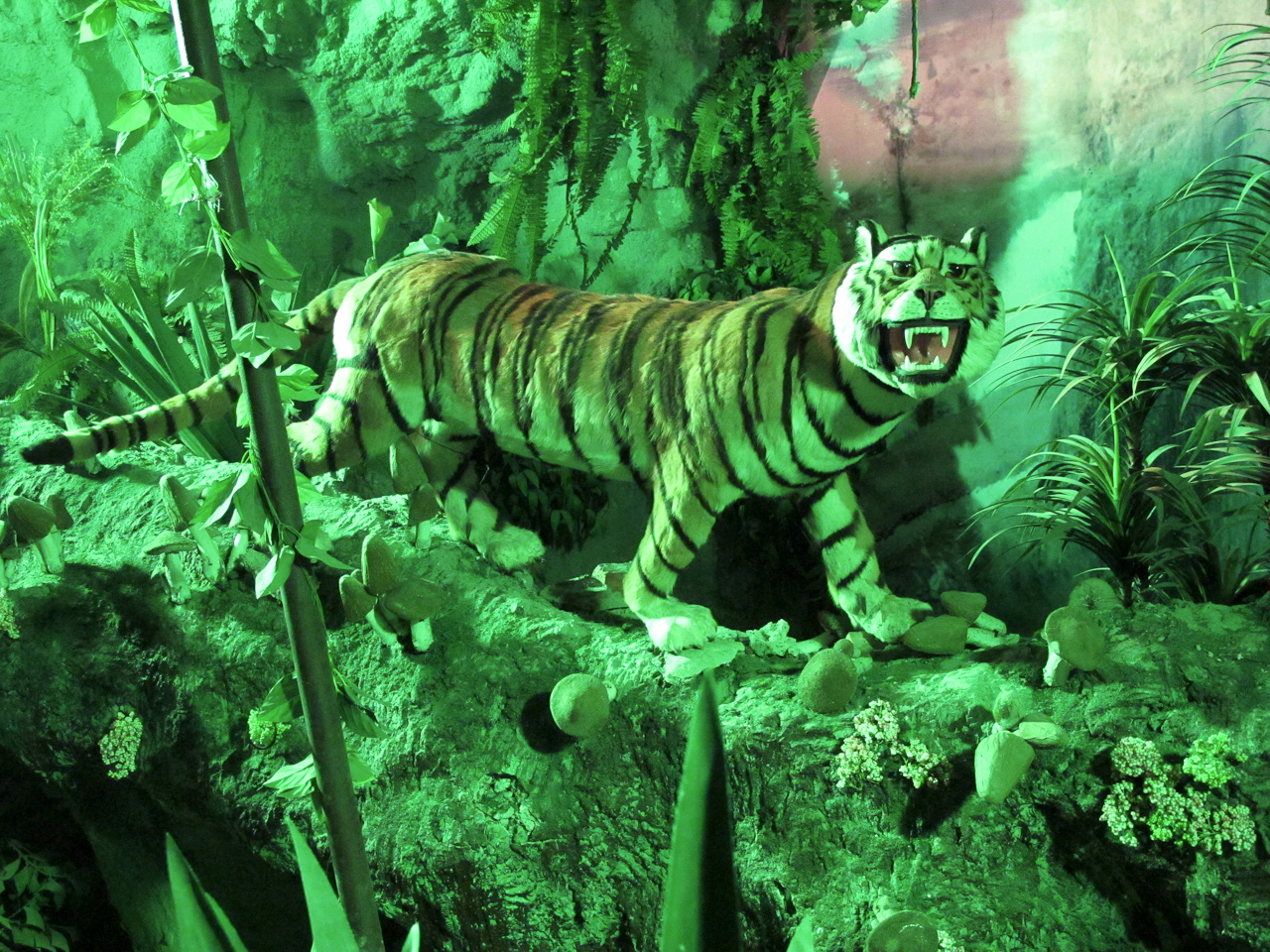
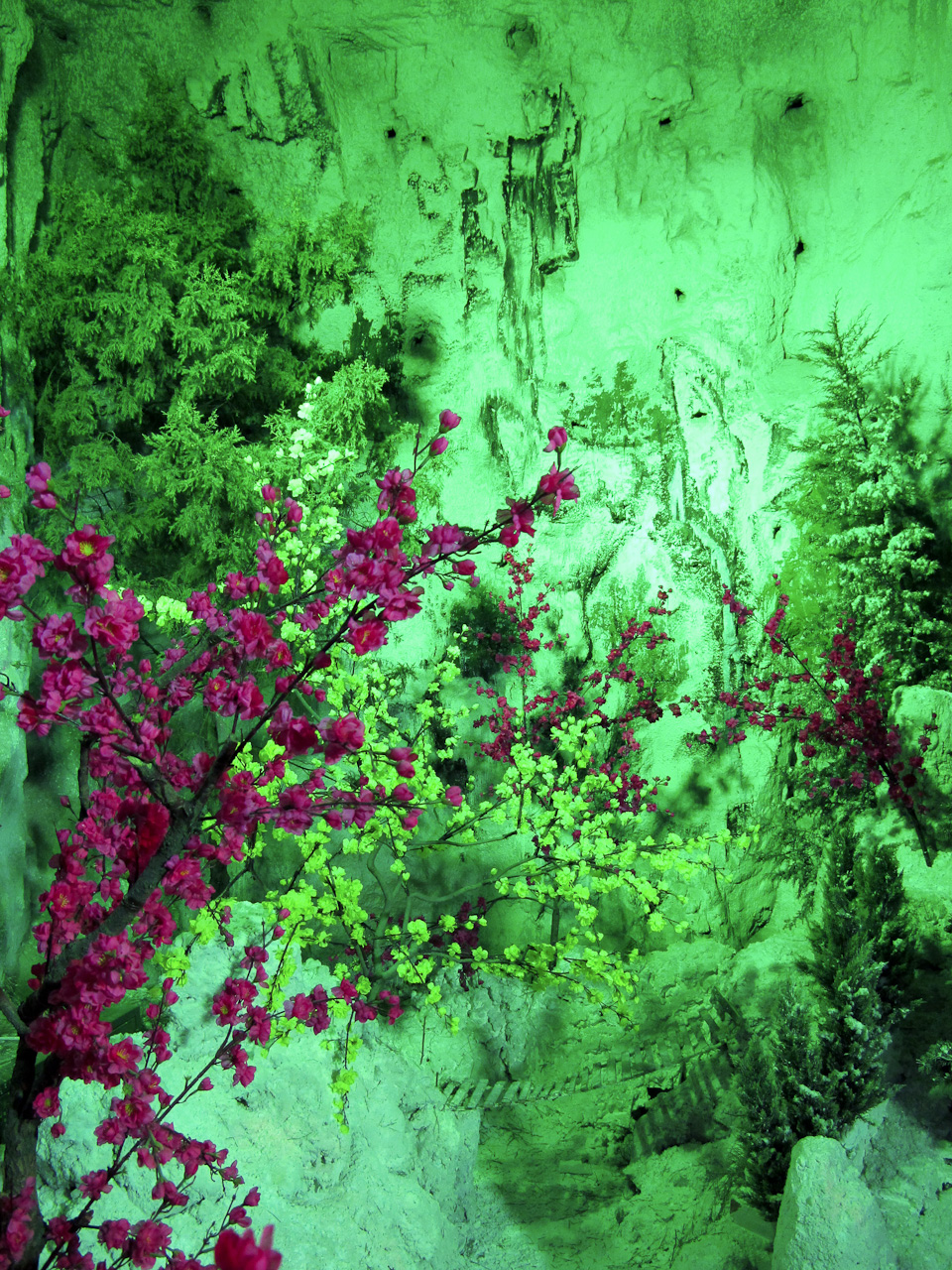
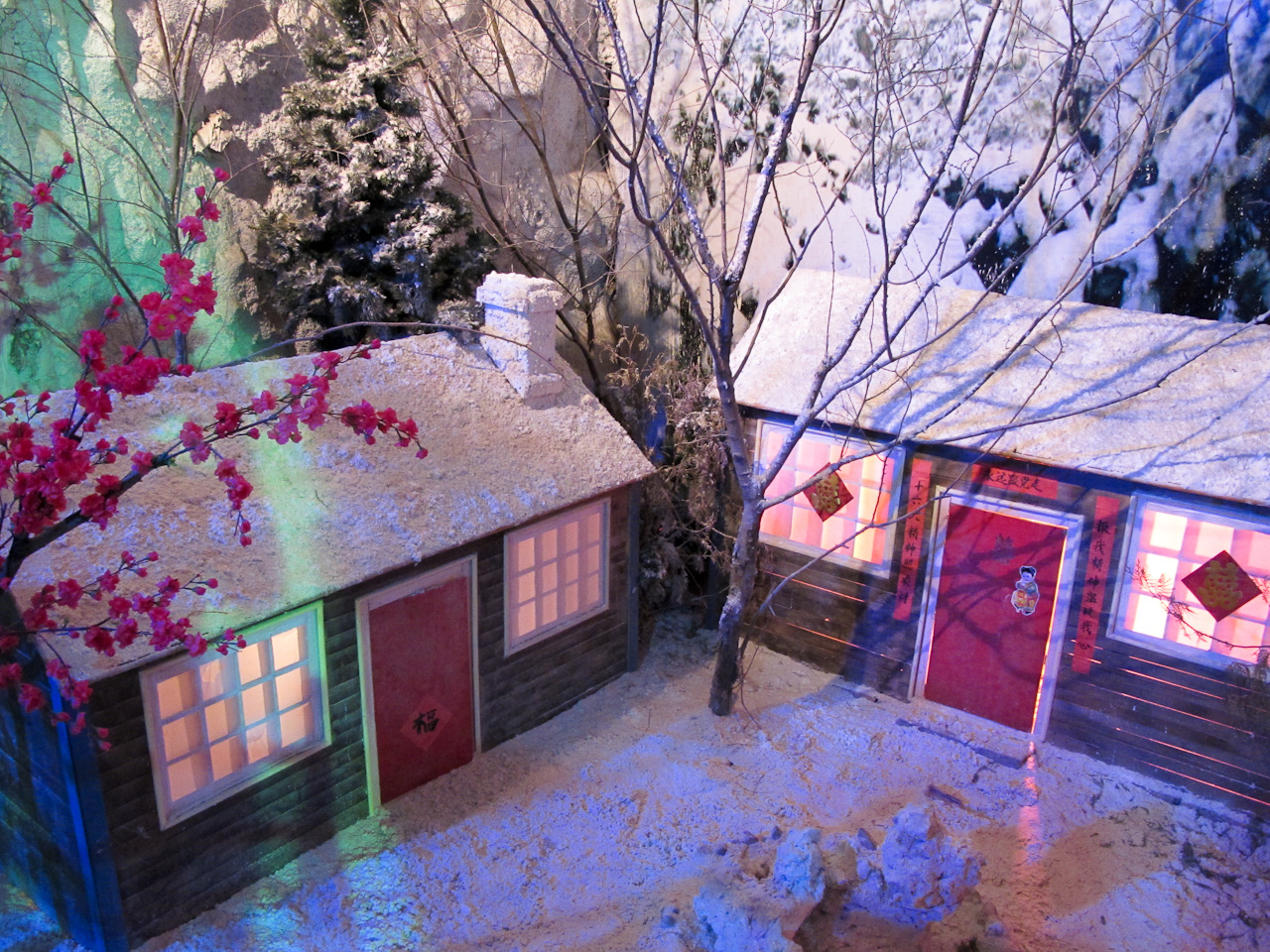
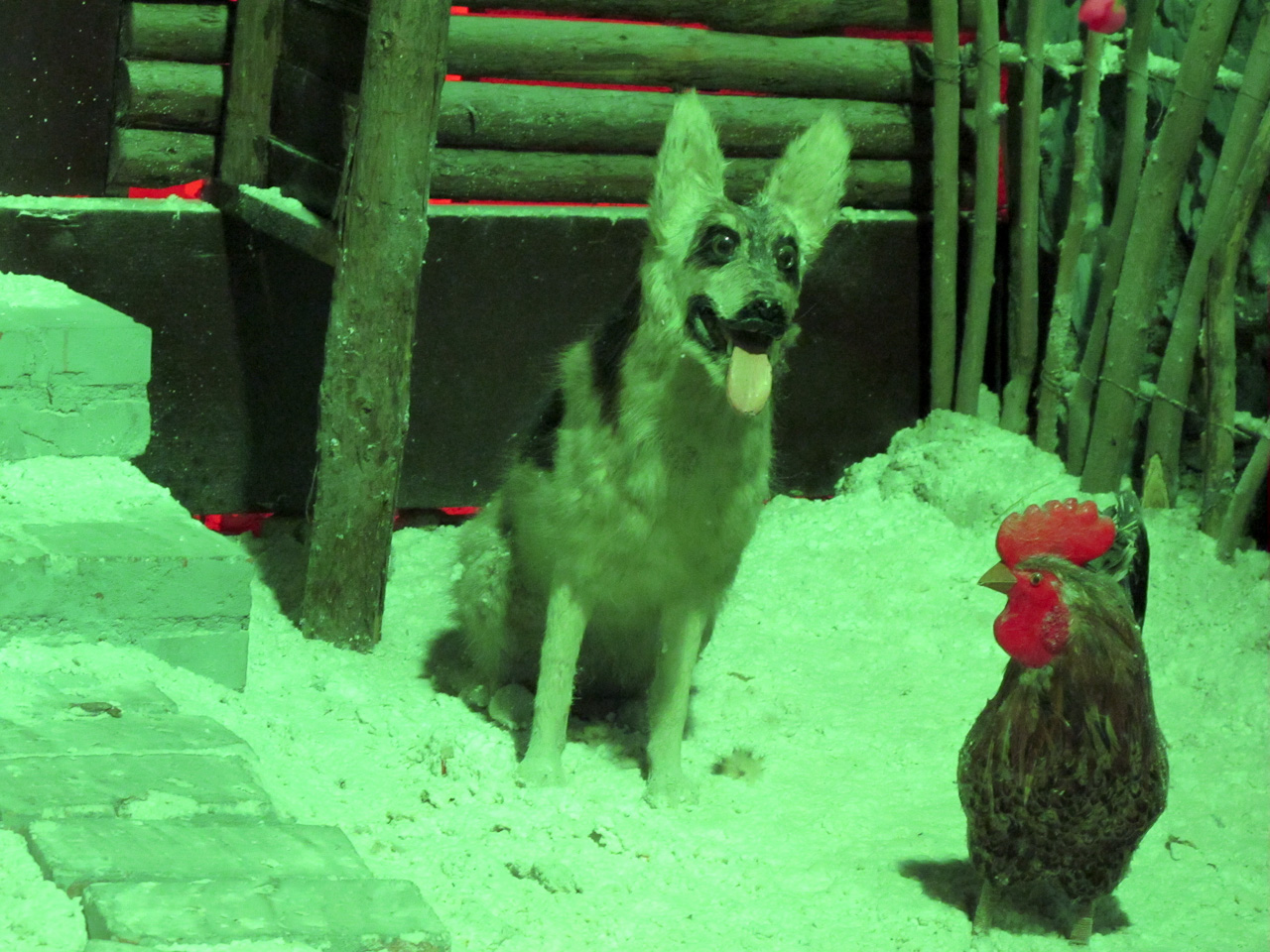
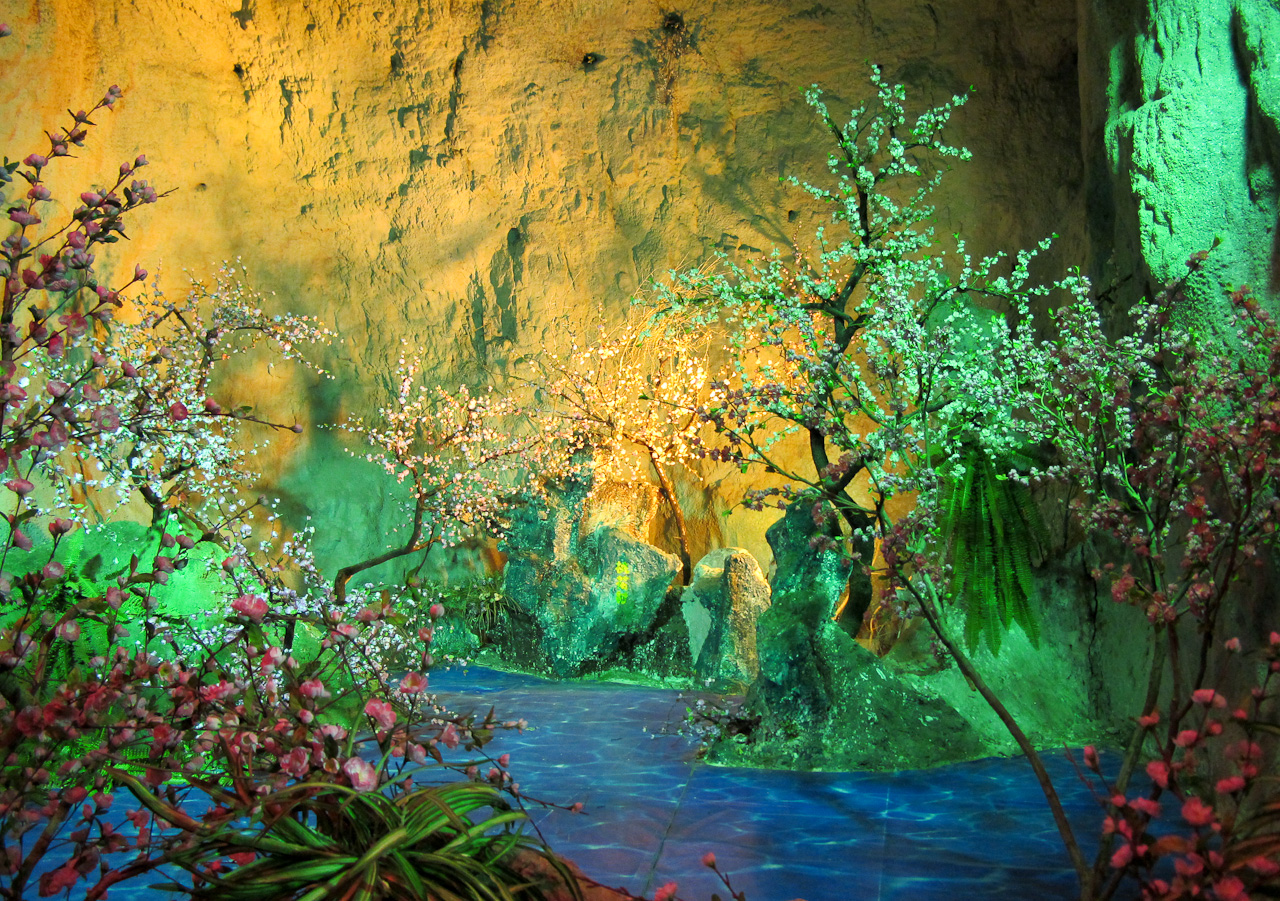
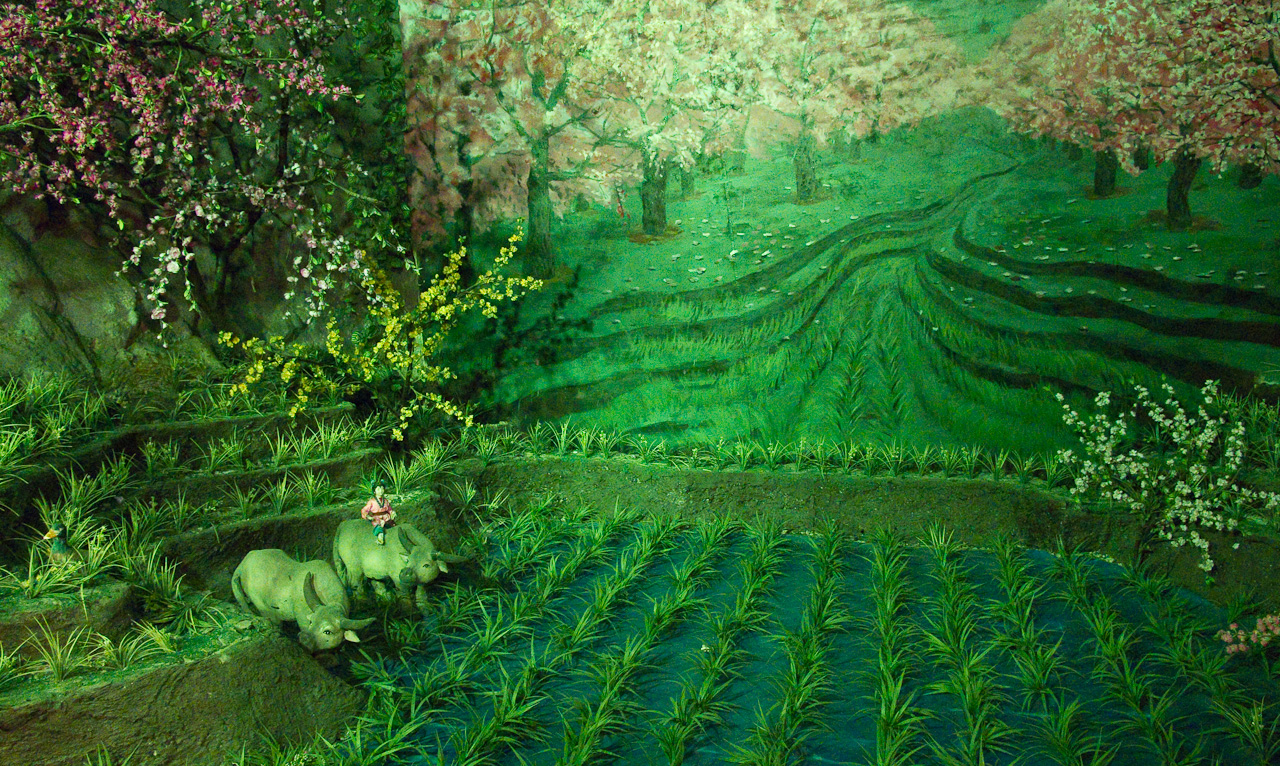
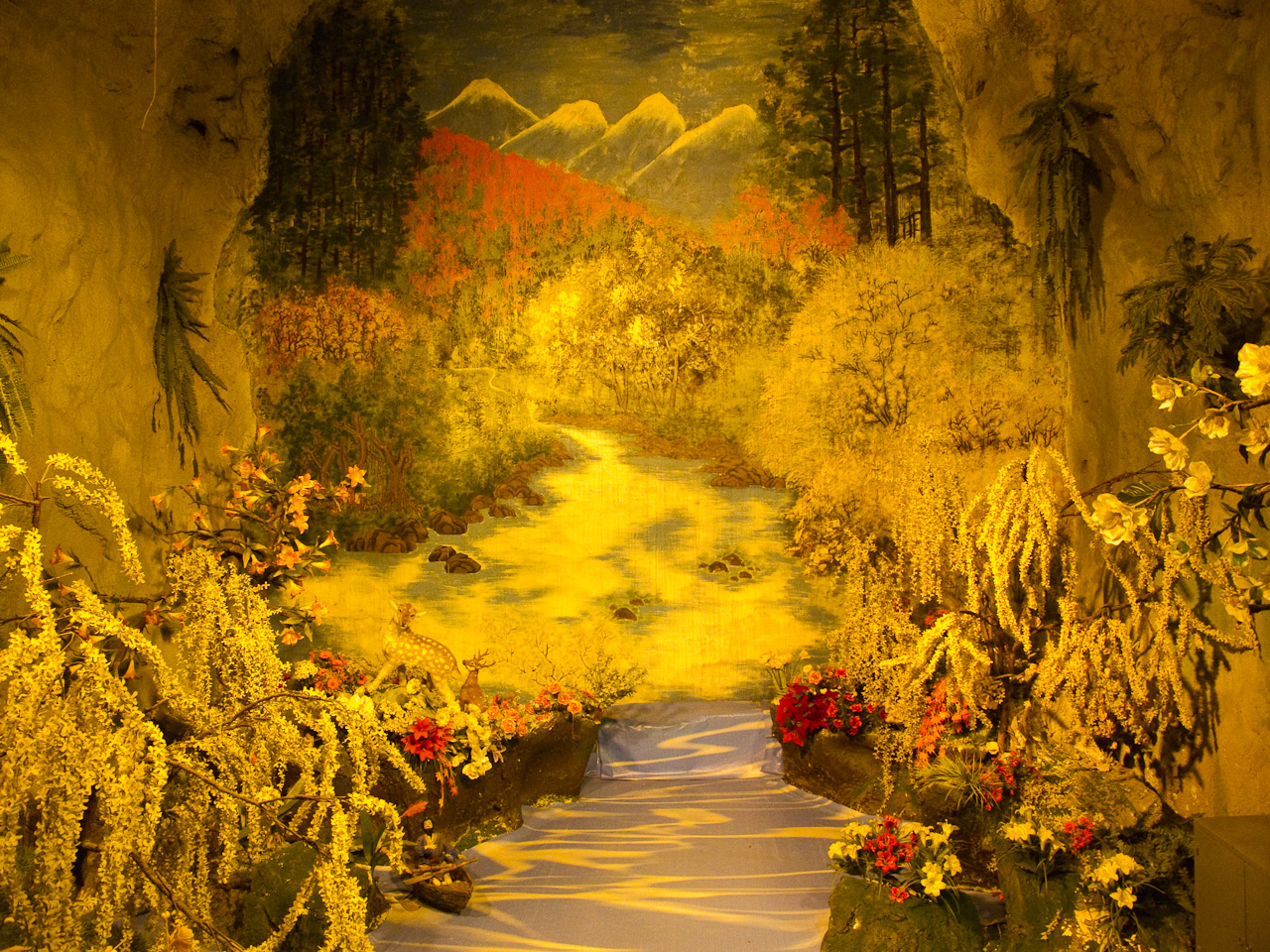
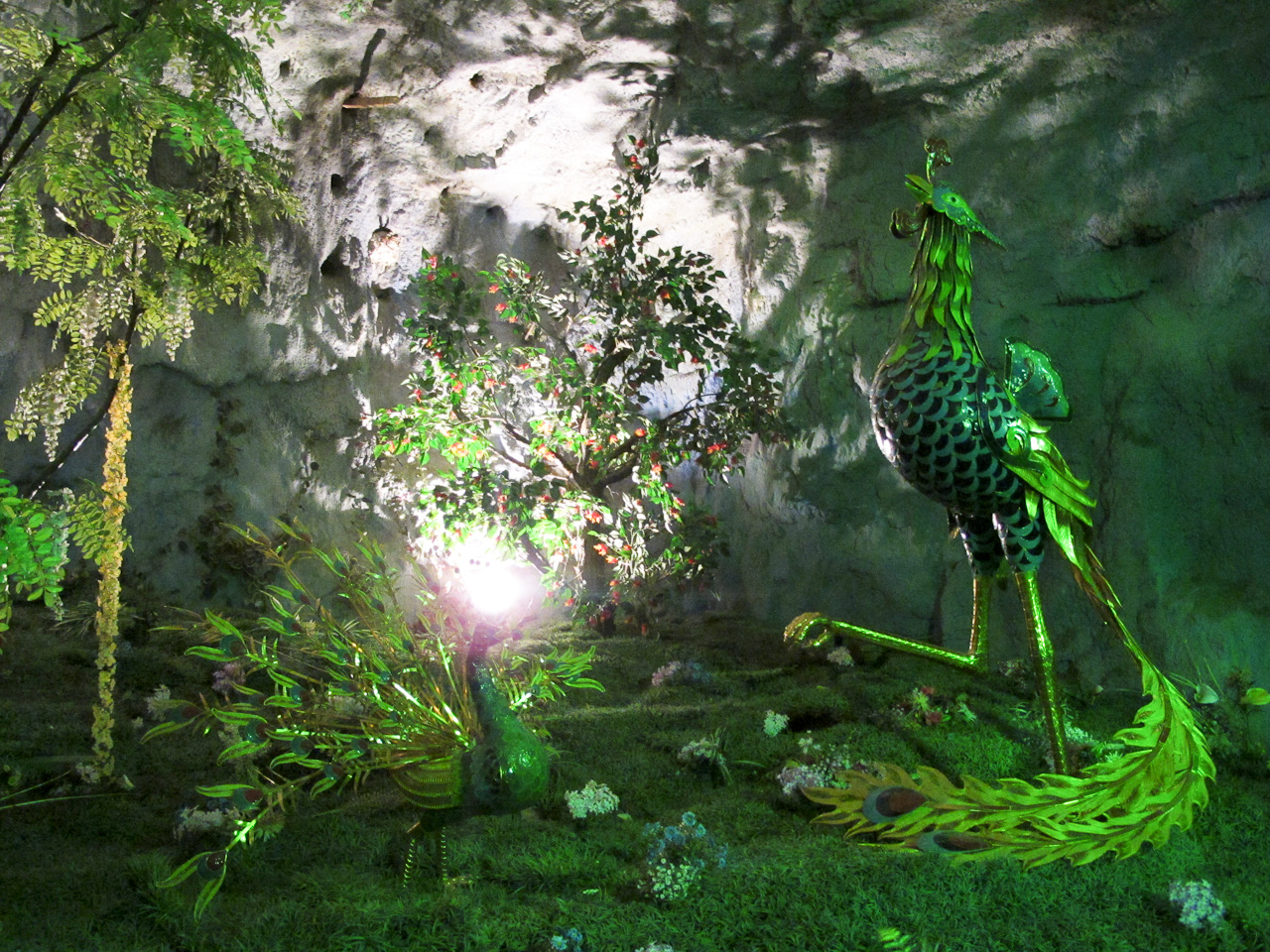
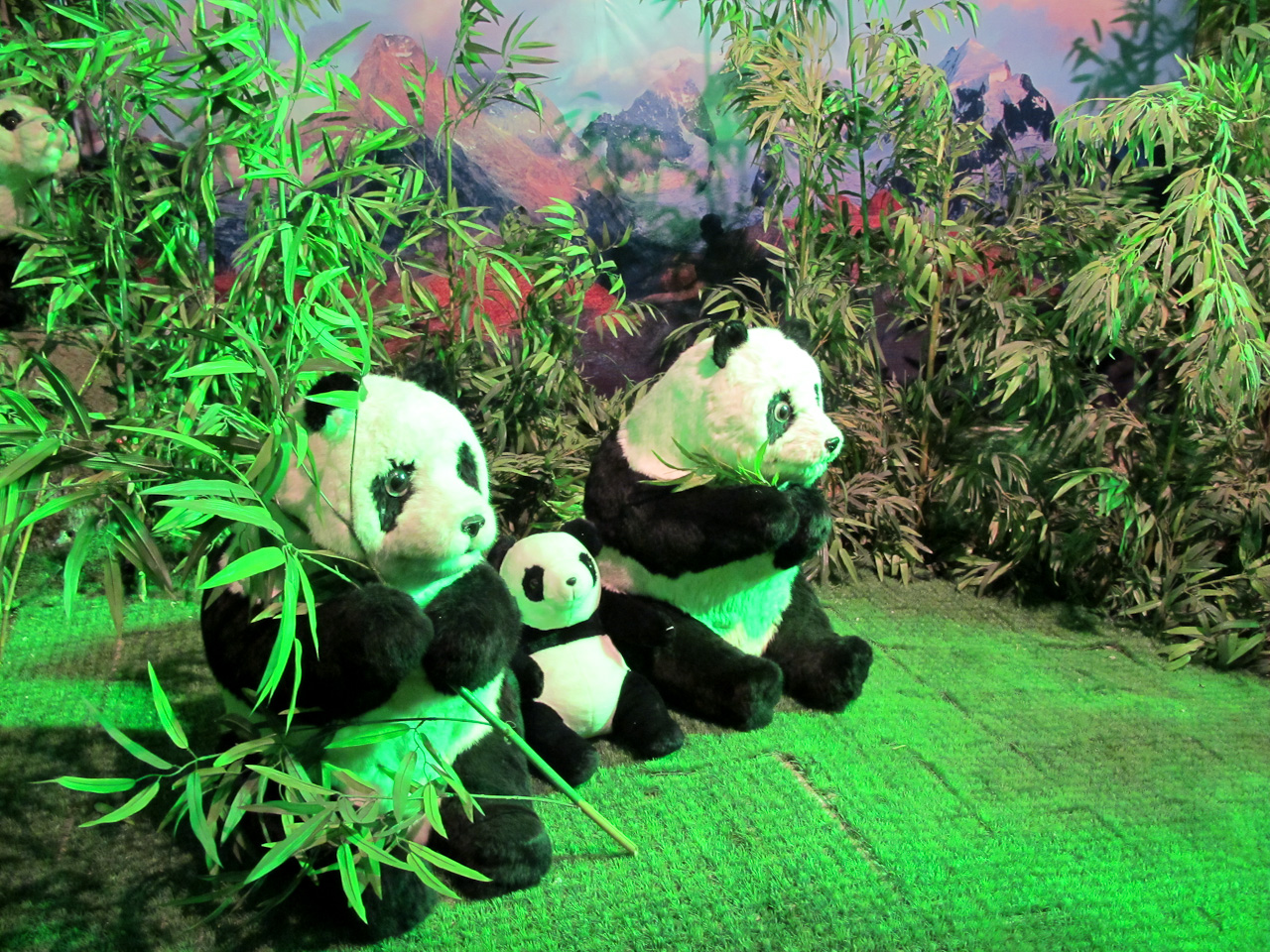 To descend back below the dam, we had the option of going through a plain tunnel bored through the cliff face, or 白化洞, the Hundred Flower Cave, for only 10 kuai. A handful of us lept at the opportunity to spelunk, but instead stumbled into a literal plastic jungle. It’s astonishing how much effort was put into covering every inch of this man-made cave with some sort of fake greenery. We walked by pastoral scenes and random winter-themed displays, mouths as agape as the dragon standing guard at the entrance. The effect was more humorous than anything else, but it was still perturbing in its randomness. Another “Oh, China” moment for the books. We emerged from the other end of the cave, stunned but unrepentant for our decision, that kind of crazy was worth the price of admission.
httpvh://www.youtube.com/watch?v=0pQ0zPnqJrQ
The slide was unfortunately closed due to the light rainfall which shouldn’t have made any significant impact on the machinery. I mean, it was a slide, there wasn’t a whole lot to it. Alas, those who had forsaken the hundred flower cave were left with nothing but a long walk back to the bus, whilst I brought home with me memories to last a lifetime.


Leave a Reply